Digital product engineering · Integration
Enterprise systems integration and API engineering
We provide enterprise systems integration and API engineering: an API layer, event backbone, orchestration and connectors that join ERP, CRM, core, operational and partner systems into one working whole. Contracts are versioned and tested, failures are handled deliberately and every message can be traced, so integration stops being the part of the estate that nobody understands. You own the code.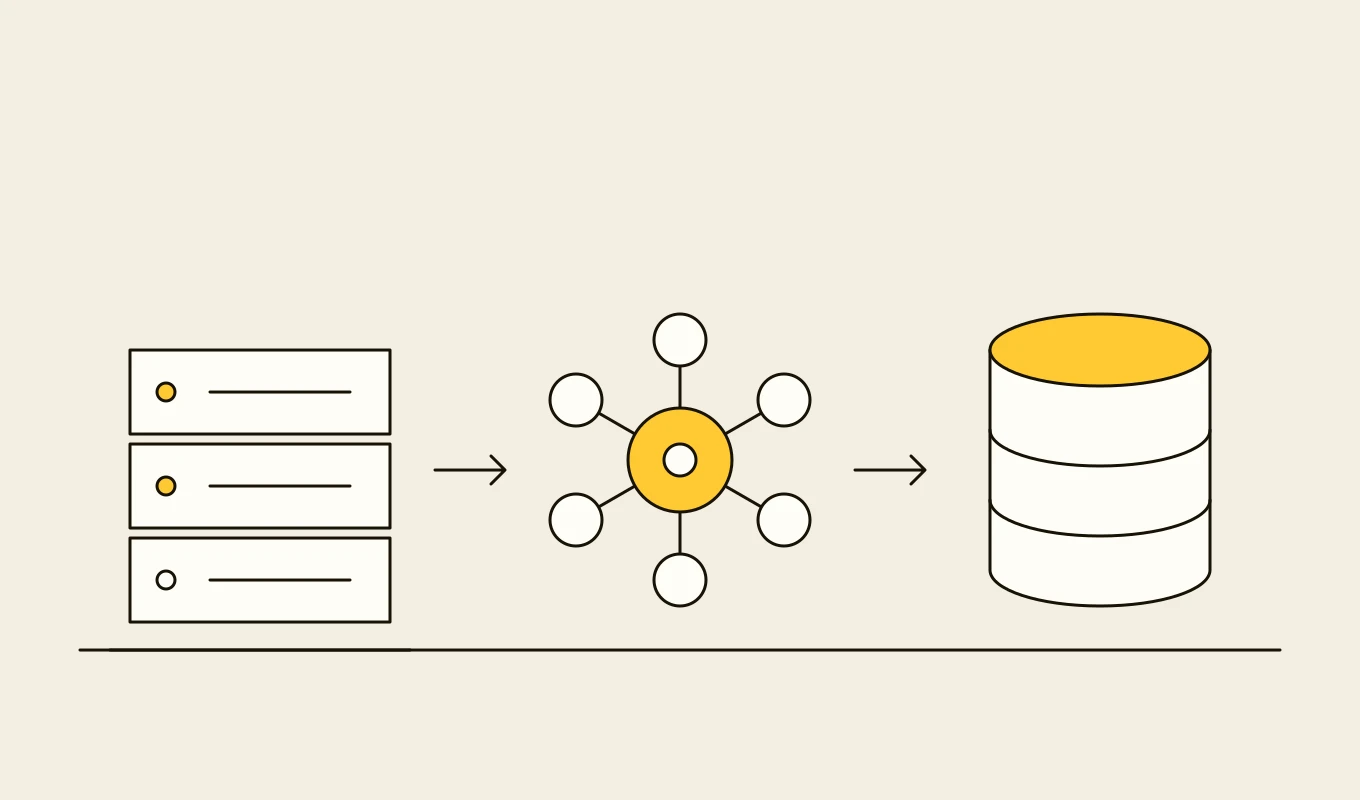
Reference architecture · Data and integration
Data platform and integration reference architecture
A reference checklist for enterprise integration, modernisation and data platform projects: domains, integration patterns, contracts, platform layers, master data, quality, security and operating model.- 01Eight areas to decide before you modernise, integrate or build a data platform.
- 02Contract, schema and versioning items that stop integrations breaking.
- 03Quality and ownership items that make a platform trusted.
- 04Seven questions to put to any vendor or development partner.
Free download
Get it on screen in a few seconds.
What the system does, module by module.
- 01
API gateway and management
Authentication, rate limits, versioning, analytics and a developer portal for internal teams, partners and customers. - 02
Integration services
Services that orchestrate multi-step processes across systems, with state, compensation for failures and clear ownership of each process. - 03
Event backbone
A message broker or log-based streaming platform that publishes business events once and delivers them to every system that needs them. - 04
Connectors and adapters
Maintained connectors for ERP, CRM, core banking, historians, SaaS applications and databases, hiding each system's quirks behind stable interfaces. - 05
Transformation and mapping
Mapping between formats and data models, with mapping logic in code and configuration that can be reviewed and tested rather than hidden in a tool. - 06
B2B and EDI gateway
Exchange of orders, shipping notices and invoices with partners over EDI, APIs and secure file transfer, with acknowledgements and partner onboarding. - 07
Contracts and schema registry
API and event contracts in version control, a registry of schemas and automated compatibility checks in the build. - 08
Error handling and replay
Retries with backoff, dead-letter queues, an operations console to inspect and replay failed messages, and alerts when flows stall. - 09
Monitoring and tracing
End-to-end tracing of a business transaction across systems, with metrics, dashboards and runbooks for integration support.
Reference architecture.
Standards and interfaces
What we design against.
- OpenAPI, AsyncAPI and JSON Schema
- Machine-readable contracts for synchronous APIs and events, validated in the build.
- CloudEvents
- A common event envelope that lets events travel between systems and platforms with consistent metadata.
- Enterprise Integration Patterns
- The established vocabulary of messaging patterns such as routing, translation, idempotent receivers and dead-letter channels.
- OAuth 2.0, OpenID Connect and mTLS
- Authentication and authorisation for users and for service-to-service calls.
- EDI and e-invoicing standards
- ANSI X12, EDIFACT, UBL and Peppol for trading partner exchange.
- Avro and Protocol Buffers
- Compact, versioned serialisation formats for high-volume event streams.
Data model
The core entities.
- API and version
- Contract, owner, consumers, lifecycle state and the date it will be retired.
- Event type and schema
- Name, schema versions, producer, consumers and compatibility rules.
- Message
- Payload, correlation identifier, source, time, status and retries.
- Process instance
- Steps completed, state, compensation actions and the business key.
- Mapping
- Source field, target field, transformation, version and tests.
- Partner and endpoint
- Trading partner, protocol, credentials, schedule and acknowledgements.
- Failure and replay
- Failed message, error, owner, decision and result of replay.
When custom development is the right call.
Controls designed in, not added later.
Zero trust between services
Mutual authentication, scoped tokens and least privilege between every pair of services.Secrets and key management
Credentials in a managed store, rotated and never in code or configuration files.Data protection in transit and at rest
Encryption throughout, masking of sensitive fields in logs and traces and data minimisation across interfaces.Idempotency and integrity
Message keys and de-duplication so a retry never repeats a business action.Audit and traceability
Each transaction can be followed from origin to completion, with who and what touched it.
From discovery to a system you run.
- 01
Landscape and flow mapping
We map the systems, interfaces and flows, their owners and failure history, and rank the integration problems that cost the business most. - 02
Target architecture and contracts
The integration architecture, naming and contract standards, and security model are agreed with the system owners. - 03
Build the platform and first flows
The gateway, backbone and first connectors go live with the highest-value flows, with tracing from day one. - 04
Migrate point-to-point links
Existing direct integrations move onto the platform one at a time, with tests that compare old and new behaviour. - 05
Operate and govern
Run, monitoring and support, with a contract and change process that new projects follow.
Relevant work
Where to see our work.
Common questions.
- Do we need an enterprise service bus?
- Usually not in its classic form. A mix of APIs for requests, events for notifications, and orchestration for processes, with contracts in version control, gives the benefits without a central bottleneck.
- How do you stop integrations breaking when systems change?
- Contracts are versioned and tested. A change that would break a consumer fails the build, and old versions are supported for an agreed period before they are retired.
- What happens when a message fails?
- It is retried with backoff, then moved to a dead-letter queue with the error and context. Support staff can inspect, correct and replay it from a console, and alerts tell them when a flow is stuck.
- Can you connect SaaS and on-premise systems together?
- Yes. Connectors and secure gateways bridge cloud and on-premise systems, with outbound-initiated connections where network policy requires.
- Who owns the code?
- You do. The code, the contracts and the configuration stay yours.