Data engineering · Sustainability
ESG and carbon accounting data platform
We build ESG and carbon accounting data platforms for companies and financial institutions: collection of activity data from operational and finance systems, scope 1, 2 and 3 emissions calculation with documented factors, evidence and approvals for every figure, and reports aligned with the frameworks that apply. Sustainability numbers get the same controls as financial numbers, and you own the platform and the code.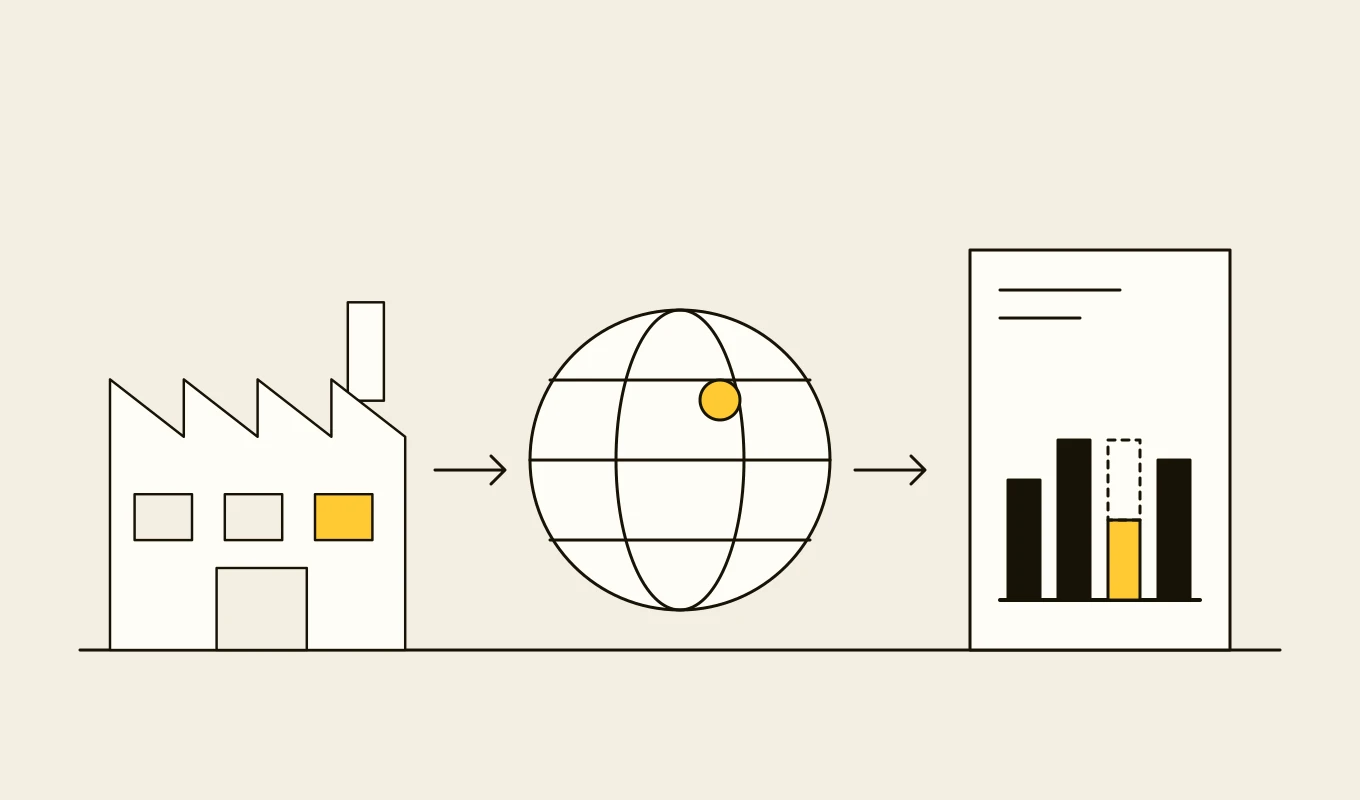
Checklist · Emissions reporting
Methane and emissions data readiness checklist
A checklist for operators and companies preparing methane measurement, reporting and verification and greenhouse gas reporting: inventory, activity data, measurement, reconciliation, uncertainty, verification and governance.- 01Eight areas to settle before you buy or build an emissions data platform.
- 02The records that source-level reporting and verifiers expect.
- 03Items for linking emissions data to production and maintenance systems.
- 04Seven questions to put to any vendor or development partner.
Free download
Get it on screen in a few seconds.
What the system does, module by module.
- 01
Organisational and operational boundary
The legal entities, facilities and activities in scope under the chosen consolidation approach, with changes through the year handled and recorded. - 02
Activity data collection
Automated feeds from energy, fuel, travel, procurement, logistics and facility systems, and structured forms for what cannot be automated, with owners and deadlines. - 03
Emission factor library
Versioned factors from recognised databases and supplier data, with source, region, year and applicability, applied by rule. - 04
Scope 1 and 2 calculation
Direct emissions from fuels and processes, and purchased energy with location-based and market-based methods, with the method shown for each figure. - 05
Scope 3 calculation
Category-level calculation from spend, activity and supplier data, with a plan to move from estimates to primary data and data quality scores. - 06
Financed emissions for financial institutions
Attribution of client and investee emissions to loans and investments using the industry methodology, with data quality scoring per holding. - 07
Evidence and approval workflow
Source documents attached to data points, review and approval by owners and a reviewer, and a locked record when a period is closed. - 08
Targets, scenarios and reduction tracking
Targets by scope and entity, progress against them, and the effect of reduction projects and scenarios on the figures. - 09
Framework reporting
Outputs mapped to the reporting standards that apply, with the underlying data, methodology notes and an assurance pack.
Reference architecture.
Standards and interfaces
What we design against.
- GHG Protocol and ISO 14064-1
- The standards for corporate greenhouse gas inventories: boundaries, scopes, calculation approaches and reporting.
- ISSB IFRS S1 and S2
- International sustainability disclosure standards on general requirements and climate-related disclosures, which many jurisdictions adopt.
- EU CSRD and ESRS
- The European Union's corporate sustainability reporting directive and standards, including double materiality and the climate standard ESRS E1.
- HKEX ESG reporting guide
- Hong Kong listing rules on environmental, social and governance reporting, including climate-related disclosure.
- PCAF
- The Partnership for Carbon Accounting Financials methodology for financed emissions.
- Assurance standards
- ISAE 3000 and ISAE 3410 for assurance on sustainability and greenhouse gas information.
Data model
The core entities.
- Entity and facility
- Legal entity, facility, ownership share, control approach and period in scope.
- Activity data point
- Quantity, unit, period, source system or form, owner and the evidence attached.
- Emission factor
- Factor, gas, unit, source, region, year and applicability rules.
- Emission result
- Scope, category, value, method, factor version and data quality score.
- Supplier or client record
- Primary data supplied, estimate used, quality score and the engagement status.
- Review and approval
- Reviewer, decision, comments, time and period lock.
- Disclosure datapoint
- Framework requirement, value, narrative, source figures and approval.
When custom development is the right call.
Controls designed in, not added later.
Controls like financial reporting
Approvals, segregation of duties and period locks apply to sustainability data as to financial data.Evidence retention
Source documents and calculations are retained unaltered, with lineage to every reported figure.Methodology governance
Changes to factors, boundaries and methods are versioned, approved and applied to restated periods consistently.Access by role and entity
Data owners, reviewers, auditors and external parties see only their scope.Audit trail
All changes and approvals carry user and time, ready for assurance.
From discovery to a system you run.
- 01
Reporting obligations and boundary review
We review the frameworks and commitments that apply, the boundary and the existing data, with sustainability, finance and operations. - 02
Data and method design
Data sources, factors and methods are agreed, with owners and the evidence required for each data point. - 03
Build scope 1 and 2 first
Direct emissions and energy are automated first, producing an auditable inventory. - 04
Add scope 3 and financed emissions
Scope 3 categories and, for financial institutions, financed emissions follow, with data quality improvement plans. - 05
Reporting and assurance
Framework reports and assurance packs are produced from the platform, and the process runs on the reporting calendar.
Relevant work
Where to see our work.
Common questions.
- Do we need to build this, or use an ESG product?
- Most companies should start with a product. Building makes sense when your sources and methods are complex, when you need financed emissions or industry-specific calculation, or when sustainability data must sit in your own governed data platform.
- How do you deal with scope 3, where data is poor?
- By starting with spend- and activity-based estimates, scoring data quality per category, and engaging the suppliers and clients that matter most to replace estimates with primary data over time.
- Can the platform support several reporting frameworks at once?
- Yes. The data and methods are held once, and each framework is a mapping from the same datapoints, so figures are consistent across disclosures.
- Is the data ready for assurance?
- That is the design goal. Every figure links to its source data, factor, method and approval, and the system produces the evidence pack an assurance provider asks for.
- Who owns the code and the data?
- You do. The code, the methods and the data stay yours.