Enterprise platforms · Agriculture
Farm management ERP for agricultural enterprises
We build custom farm management ERP for agricultural enterprises: a register of land and fields, crop planning and rotation, operations and machinery data, inputs and storage, seasonal labour, costs and margins per field, yields and the compliance records that buyers and regulators ask for. One system replaces the farm's spreadsheets and disconnected tools, and you own the code.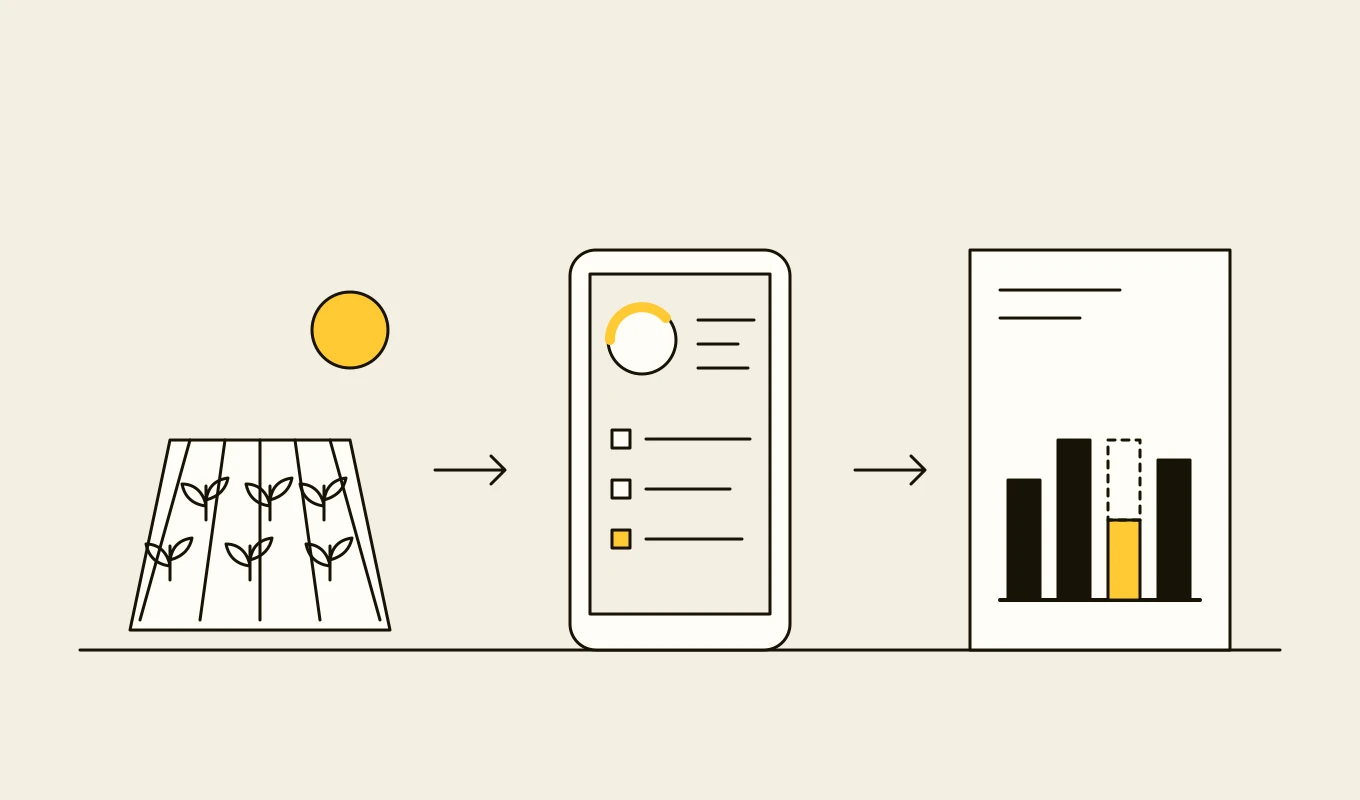
Checklist · Agriculture
Agri ERP and traceability requirements checklist
A requirements checklist for farm management, dealer, grain and field systems, with the records and geolocation that deforestation and food traceability rules ask for.- 01Eight requirement areas from the field register to compliance records.
- 02What plot-level geolocation and chain-of-custody records need to contain.
- 03Items for field apps that work without a mobile signal.
- 04Seven questions to put to any vendor or development partner.
Free download
Get it on screen in a few seconds.
What the system does, module by module.
- 01
Land and field register
Farms, fields, boundaries and soil zones on a map, with ownership or lease, area, crop history and the documents that belong to each parcel. - 02
Crop planning and rotation
Plans by field and season with rotation rules, varieties, planting windows, expected yield and input budgets, compared with what actually happens. - 03
Field operations
Planting, spraying, fertilising, harvesting and tillage recorded with date, area, product, rate, operator and machine, from the cab or the office. - 04
Machinery and telematics
Machine register, hours and maintenance, with operation and position data imported from machine telematics and task files. - 05
Input inventory and storage
Seed, fertiliser, crop protection and fuel in stores with batch and expiry, issued to fields and operations, with the link to purchase orders. - 06
Labour and payroll data
Seasonal and permanent workers, time and piece-rate work by field and task, and the output to payroll. - 07
Costs and margin per field
Costs from inputs, labour, machinery and overheads allocated to fields and crops, with margin per hectare and per tonne. - 08
Harvest, yield and grain logistics
Yield by field and zone, harvest logistics to stores and buyers, with the handover to the grain system. - 09
Compliance and records
Records for pesticide and fertiliser use, water, subsidies and certification schemes, produced from the operations recorded.
Reference architecture.
Standards and interfaces
What we design against.
- ISO 11783 (ISOBUS) and ISOXML
- The standard for communication between tractors and implements, and the task-file format for exchanging jobs and results with farm software.
- agroXML and open agricultural data formats
- Open schemas for field operations and agricultural data exchange.
- OGC and GeoJSON geospatial standards
- Field boundaries and maps in standard formats that other systems can read.
- Certification schemes
- Records required by schemes such as GLOBALG.A.P. and by buyers' supplier standards.
- Agricultural subsidy and environmental rules
- Declarations and records for support schemes and for nutrient, pesticide and water rules, which differ by country.
- GS1 identifiers
- Location and product identifiers used to link farm records to downstream traceability.
Data model
The core entities.
- Farm, field and boundary
- Parcel geometry, area, tenure, soil zones and the farm that manages it.
- Season and crop plan
- Crop, variety, planting and harvest windows, budget and expected yield.
- Operation
- Type, date, area covered, products and rates, operator, machine and weather.
- Input product and stock
- Product, batch, expiry, quantity, store and issues to operations.
- Worker and timesheet
- Person, role, field and task, hours or units and pay basis.
- Cost entry
- Source, amount, allocation to field and crop and the period.
- Harvest record
- Field, crop, quantity, quality, moisture and the destination store or buyer.
When custom development is the right call.
Controls designed in, not added later.
Role-based access
Farm managers, agronomists, operators, finance and auditors see only what they need, by farm and field.Offline resilience
Field apps record without a signal and synchronise later, with conflicts shown for review.Records with attribution
Each operation and product use is recorded with who, when and where, and changes keep the earlier value.Data ownership and sharing
Data from machines and advisers is shared under explicit permissions and can be withdrawn.Backup and continuity
Tested restore for season-critical data, with exports in open formats.
From discovery to a system you run.
- 01
Season walk-through
We follow a season's records with managers, agronomists and finance and list every spreadsheet, form and system the data passes through. - 02
Model and workflow design
The field, crop, operation and cost models are agreed together with the compliance records and the integrations needed. - 03
Build and load the field register
Fields, boundaries and history are loaded and checked, then operations capture goes live for one farm. - 04
Add inventory, labour and costing
Inputs, labour and costing follow, and the first margin per field report is compared with finance's own figures. - 05
Roll out across farms
More farms, machinery data and compliance records are added in the rhythm of the season.
Relevant work
Where to see our work.
Common questions.
- Is this for small farms or large enterprises?
- For agricultural enterprises: large farms and farming groups with several teams, farms and systems. Single small farms are usually better served by an off-the-shelf farm management product.
- Can it import data from our machines?
- Yes, where the machines or their platforms export task files or offer APIs, typically through ISOXML or the manufacturer's data interface. Operations and positions are matched to fields.
- How do you calculate margin per field?
- From the costs of inputs, labour, machinery and allocated overheads recorded against each field, and the revenue from the harvest allocated by yield, reconciled to the accounting system.
- Does it help with compliance?
- Yes. Application logs, input records and field histories are the same data as the operational records, so reports for buyers, certifiers and regulators are generated rather than compiled.
- Who owns the code and the data?
- You do. The code, the data and any models stay yours.