Digital product engineering · Agriculture
Precision agriculture sensor network
We build the software and integration for precision agriculture sensor networks: LoRaWAN and cellular soil, weather and water sensors, gateways, a data platform with alerts and decision support, and links to farm management and irrigation systems. We work around your sensors and gateways, not on their electronics, and you own the code and the data.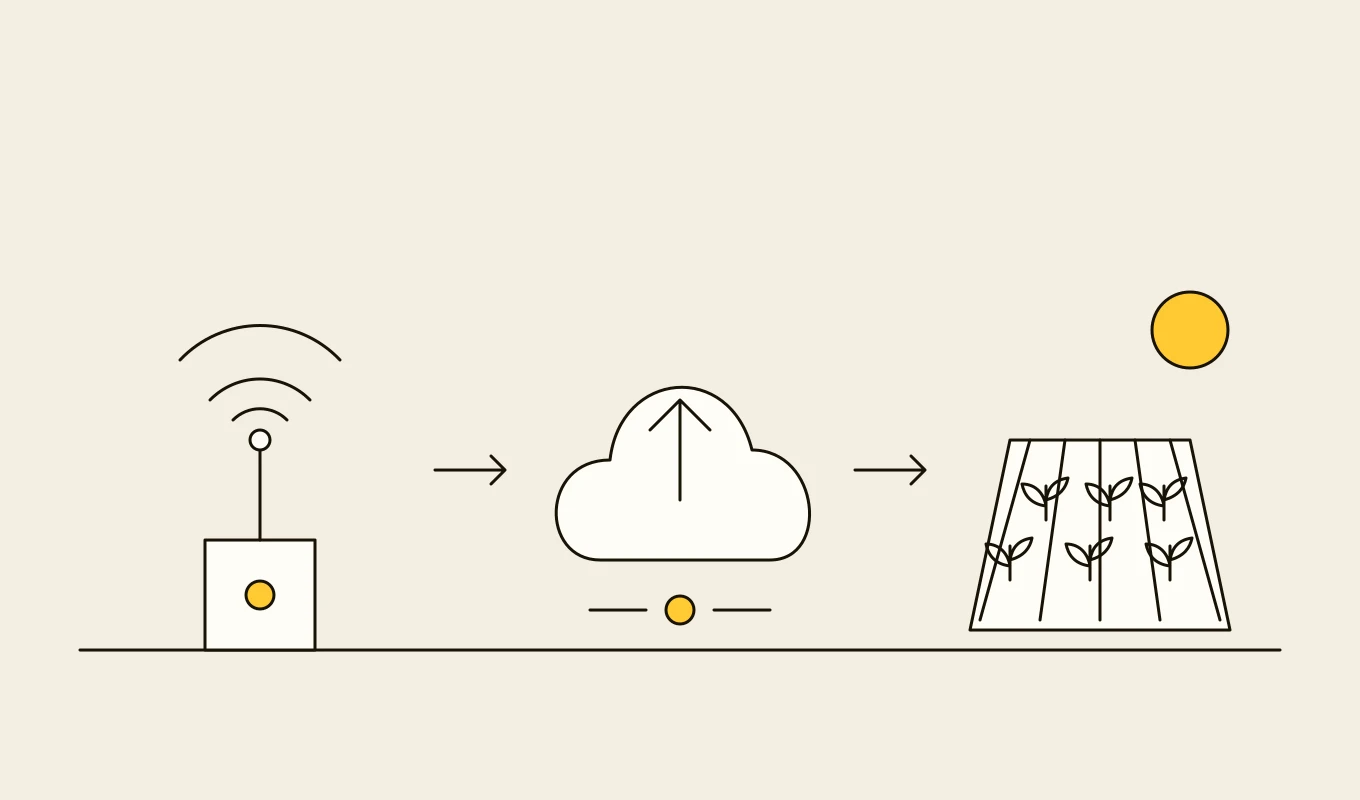
Checklist · IoT and devices
Industrial IoT and device integration checklist
A checklist for projects that connect devices, machines and sensors to software: use case, device inventory, protocols, gateways, data model, security, lifecycle and enterprise integration.- 01Eight areas to settle before you connect a fleet of devices or a plant.
- 02The device and signal facts that integration teams always need.
- 03Security and update items that are hard to add later.
- 04Seven questions to put to any vendor or development partner.
Free download
Get it on screen in a few seconds.
What the system does, module by module.
- 01
Device registry and provisioning
Sensors, gateways and weather stations with identifiers, keys, locations, installation dates and field assignments, and a process to provision and replace them. - 02
Network server integration
Connection to LoRaWAN network servers and cellular IoT platforms, receiving uplinks and passing downlink settings in a controlled way. - 03
Data ingestion and decoding
Payload decoders for each sensor type, validation, unit conversion and storage in a time-series database with device and field context. - 04
Calibration and data quality
Sensor calibration records, sanity limits, drift detection and flags for suspect readings, so decisions are not made on bad data. - 05
Field maps and dashboards
Soil moisture, temperature, conductivity and weather by field and depth on maps and charts, with history by season. - 06
Alerts and thresholds
Rules for frost, heat, water stress and disease pressure that notify the right person, with acknowledgement and escalation. - 07
Decision support
Irrigation and spraying advice from sensor data, weather forecasts and crop models, shown with the reasoning for the adviser or grower. - 08
Integration with irrigation and farm systems
Recommendations and readings exchanged with irrigation controllers and farm management through their interfaces, with any commands going through approval. - 09
Fleet health and maintenance
Battery levels, signal quality, last-seen times and maintenance tasks for the sensor estate, with firmware updates handled through the device vendor's tools.
Reference architecture.
Standards and interfaces
What we design against.
- LoRaWAN
- The LoRa Alliance's low-power wide-area protocol used by many soil, weather and water sensors, with regional parameters and security keys.
- MQTT and CoAP
- Lightweight messaging for devices and for passing data between network servers and the platform.
- NB-IoT and LTE-M
- Cellular low-power connectivity for sensors outside gateway coverage.
- OGC SensorThings API
- An open standard for exposing sensor data and observations over APIs.
- ISO 11783 and farm data interfaces
- Exchange of field data and prescriptions with machines and farm management software.
- Radio regulation
- Frequency band, power and duty-cycle rules for the country in which the network operates.
Data model
The core entities.
- Device and gateway
- Identifier, type, keys, location, install date, status and field.
- Uplink and reading
- Raw payload, decoded values, units, time, signal quality and validity flag.
- Sensor calibration
- Soil type, calibration curve, date and the person who made it.
- Field and zone
- Boundary, crop, soil zone and the sensors assigned.
- Alert rule and event
- Condition, recipients, severity, trigger, acknowledgement and outcome.
- Recommendation
- Advice, data and model used, status and the adviser's response.
- Maintenance task
- Device, issue, assignee, date and resolution.
When custom development is the right call.
Controls designed in, not added later.
Device identity and keys
Per-device keys, secure join procedures and revocation of lost or stolen devices.Encrypted transport
Encryption from device to platform, with the network server and the platform authenticating each other.Controlled commands
Any downlink or irrigation command is authorised, rate-limited and logged.Data ownership
Each grower owns its data, and sharing with advisers or vendors is explicit and revocable.Resilience
Buffering at gateways, replay after outages and alerts when sensors go silent.
From discovery to a system you run.
- 01
Use case and site survey
We agree the decisions the data must support and survey fields, coverage and existing devices with the grower and adviser. - 02
Architecture and device selection
The network design, sensor types and platform integration are agreed, using devices from vendors you choose. - 03
Pilot on a few fields
A small set of sensors and gateways is installed and connected, and the first dashboards and alerts are tested against what growers observe. - 04
Calibrate and tune
Sensors are calibrated to each soil, and thresholds and advice are tuned with growers. - 05
Scale and integrate
More fields are added, with integration to farm management and irrigation systems.
Relevant work
Where to see our work.
Common questions.
- Do you supply the sensors?
- No. We build the software and integration. Sensors, gateways and their installation come from the vendors you choose, and we connect to them through their standard interfaces.
- Which sensors and networks can you connect?
- Devices on LoRaWAN, cellular IoT or other networks that expose their data through a network server or API. Each sensor type needs a decoder and calibration, which we build and test.
- Can the system control irrigation?
- It can send advice to irrigation controllers and, where you choose, commands through their interfaces, with authorisation, limits and logging. Many growers start with advice only.
- How do you keep bad readings from driving decisions?
- Readings are validated against limits and each sensor's calibration and history. Suspect values are flagged and excluded from alerts and advice until checked.
- Who owns the code and the data?
- You do. The code, the data and any models stay yours.