Data engineering · Agriculture
FSMA 204 food traceability system
We build FSMA 204 food traceability systems for growers, packers, processors, distributors and retailers of foods on the FDA's Food Traceability List: assignment of traceability lot codes, capture of key data elements at each critical tracking event, exchange of that data with trading partners, and the ability to produce records for the FDA quickly in a sortable form. The system works from your ERP, warehouse and supplier data, and you own the code.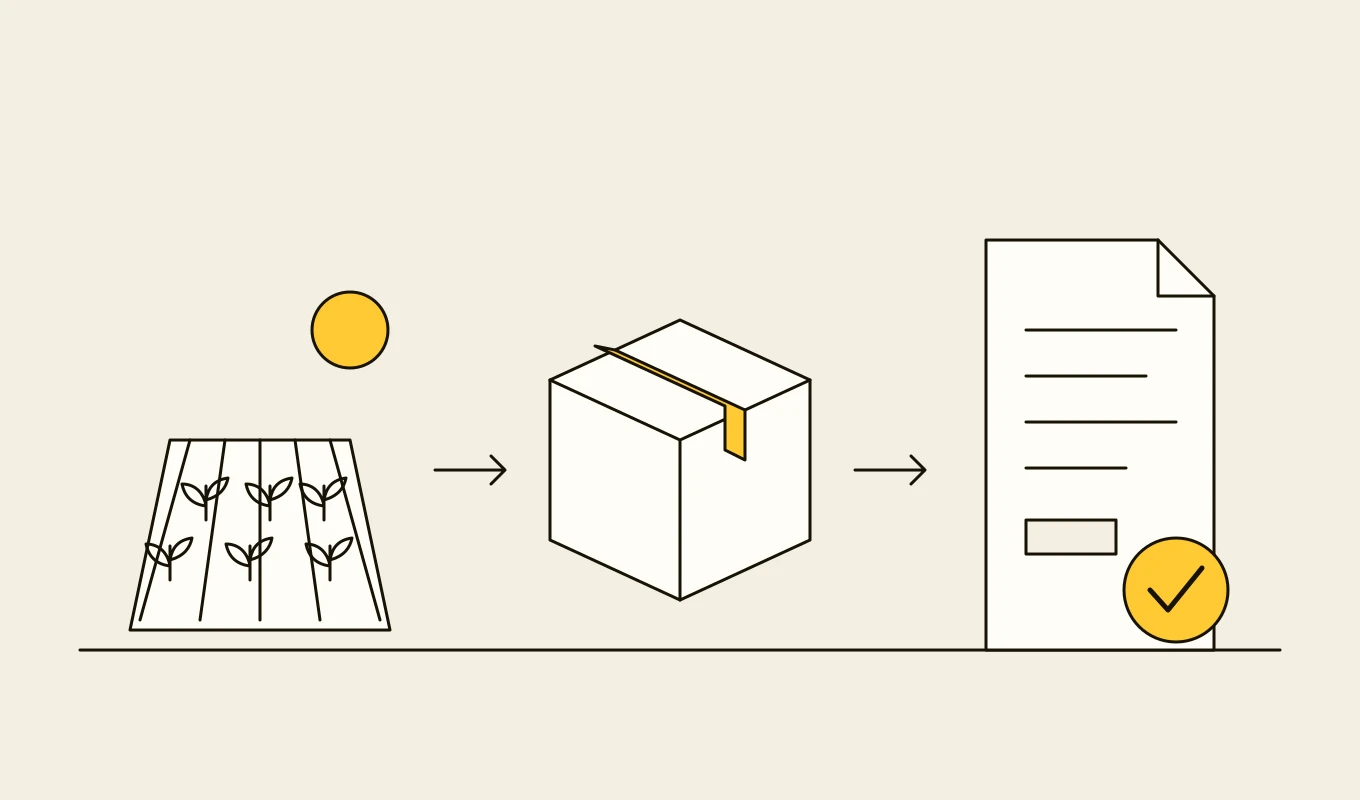
Checklist · Agriculture
Agri ERP and traceability requirements checklist
A requirements checklist for farm management, dealer, grain and field systems, with the records and geolocation that deforestation and food traceability rules ask for.- 01Eight requirement areas from the field register to compliance records.
- 02What plot-level geolocation and chain-of-custody records need to contain.
- 03Items for field apps that work without a mobile signal.
- 04Seven questions to put to any vendor or development partner.
Free download
Get it on screen in a few seconds.
What the system does, module by module.
- 01
Food Traceability List scoping
Classification of products against the list, and of the exemptions that apply, so the system captures data only where the rule requires it. - 02
Traceability lot code management
Assignment and tracking of lot codes at the points where the rule requires them, such as initial packing, transformation or first receiving. - 03
Critical tracking event capture
Recording of events such as harvesting, cooling, initial packing, first land-based receiving, shipping, receiving and transformation, from scanners, ERP and forms. - 04
Key data element validation
Checks that each event has the data the rule requires, such as lot code, product description, quantity, location and date, with exceptions raised before records are needed. - 05
Linking inputs to outputs
For transformation, the recording of which input lots went into which output lots, so a trace can run forward and backward through processing. - 06
Trading partner data exchange
Receipt and sending of traceability data with suppliers and customers using EDI, APIs and standard event messages. - 07
Location and product identification
Use of GS1 location and product identifiers, and a directory of the farms, packhouses, plants and warehouses in the network. - 08
Traceability plan and records
The plan the rule requires, with a description of procedures, point of contact and the list of foods, kept with versions. - 09
Rapid response and recall support
Production of an electronic sortable spreadsheet of relevant records on request, trace queries, mock recalls and a measure of how fast each can be done.
Reference architecture.
Standards and interfaces
What we design against.
- FDA Food Traceability Rule (FSMA Section 204)
- The rule's requirements for traceability lot codes, key data elements for critical tracking events and records for foods on the Food Traceability List. The compliance date has been extended and should be confirmed in the current rule.
- GS1 standards
- GTIN, GLN and lot identifiers, and the EPCIS event standard for exchanging traceability data between partners.
- EDI and API exchange
- ANSI X12 and API formats for advance shipping notices and other traceability data.
- Industry traceability guidelines
- Produce and food industry guidance that many customers already require from suppliers.
- Record retention requirements
- The period for which traceability records must be kept and made available.
- Other jurisdictions' rules
- EU general food law and national rules that overlap with FSMA 204 for exporters and importers.
Data model
The core entities.
- Food and product
- Item, list category, exemption status, GTIN and description.
- Traceability lot
- Lot code, assigning party and location, date and the product it covers.
- Tracking event
- Event type, date, location, parties, quantity, unit and the lots involved.
- Key data element
- Required element by event type, value, source and validation status.
- Transformation link
- Input lots, output lots, quantities and the process.
- Location
- GLN or identifier, type, owner and address.
- Records request
- Request, scope, records produced, time taken and the export delivered.
When custom development is the right call.
Controls designed in, not added later.
Data integrity
Traceability records are append-only, with corrections as new records and the original retained.Partner data separation
Partners see only the data they send or are entitled to receive.Retention and availability
Records are retained for the required period and available at short notice.Offline capture
Field and packhouse capture works without connectivity and synchronises afterwards.Audit trail
Every capture, edit and export carries user and time.
From discovery to a system you run.
- 01
Scope and gap assessment
We review which products and processes are covered and compare current records against the key data elements the rule requires. - 02
Data and event design
Lot code practices, events, data capture points and partner exchange are designed with operations and quality teams. - 03
Build capture at one network
Capture and validation go live for one product line or network, including the farms and packhouses. - 04
Exercise the trace
Mock recalls and records requests measure how fast a complete answer can be produced, and gaps are closed. - 05
Roll out and exchange with partners
More products and sites are added, with data exchange agreed with suppliers and customers.
Relevant work
Where to see our work.
Common questions.
- When do we have to comply?
- The FDA has extended the compliance date, and the extension should be confirmed in the current rule and guidance. Companies that supply large customers are often asked to meet it earlier.
- What is a traceability lot code?
- A descriptor, usually a number or alphanumeric code, that identifies a lot of food that has been initially packed, received for the first time or transformed. The code travels with the food and links records from one partner to the next.
- How fast do we have to produce records?
- The rule expects records for a request to be provided within a short time and in an electronic sortable spreadsheet, so the system is designed to produce that export directly and to be tested with mock requests.
- Does this cover foods that are not on the list?
- The rule applies to foods on the Food Traceability List. Many companies capture the same data for all products, because it is simpler and meets customer and recall needs.
- Who owns the code and the data?
- You do. The code, the records and the data stay yours.