AI/ML engineering · Banking
AI credit scoring for SME lending
We build AI credit scoring for SME lending: models that use cash-flow and transaction data, produce reason codes a credit officer and a borrower can understand, and run inside your loan origination workflow with the testing, governance and monitoring a regulated lender needs. The models, the features and the code are yours.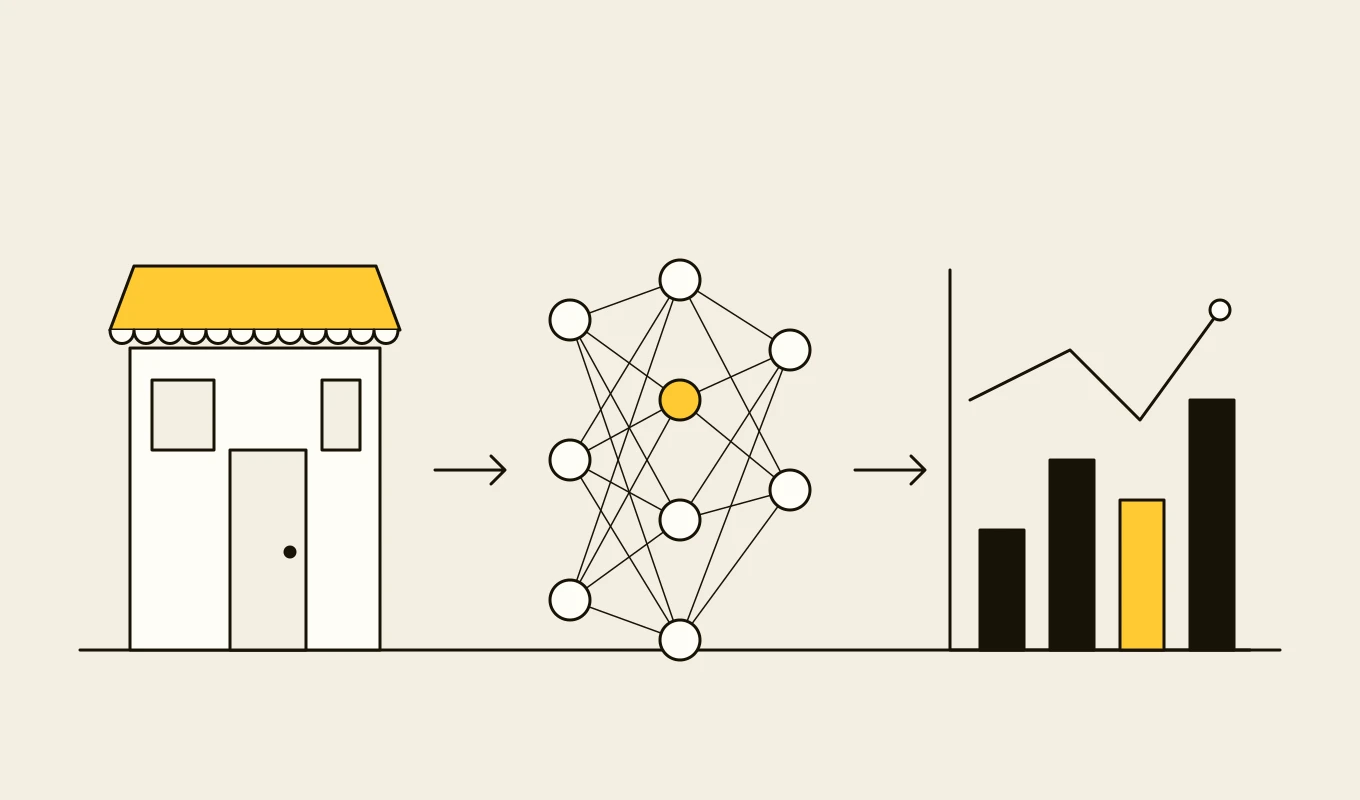
RFP template · Banking
SME lending platform RFP template
Requirements to put in an RFP for an SME loan management system, from application intake to regulatory reporting, plus the questions to ask every vendor.- 01Eight requirement areas, each as a checklist you can paste into an RFP.
- 02Integration and data points your core banking and IT teams need to answer.
- 03Security, resilience and regulatory items that are easy to miss.
- 04Seven questions to put to any vendor or development partner.
Free download
Get it on screen in a few seconds.
What the system does, module by module.
- 01
Data preparation
Bank statements, accounting and tax data, payment and e-commerce data and credit-reference information turned into consistent, point-in-time features. - 02
Cash-flow features
Revenue stability, seasonality, customer concentration, payment behaviour and buffer measures that describe a business better than a few ratios. - 03
Scorecards and gradient-boosted models
Interpretable scorecards and, where the data supports it, gradient-boosted trees with monotonic constraints, compared on the same hold-out data. - 04
Explanations and reason codes
Per-decision explanations in plain language for credit officers, and clear reasons for the applicant where decisions affect individuals such as owners and guarantors. - 05
Fairness and bias testing
Testing for unequal outcomes across protected and proxy groups, with documented mitigations and thresholds agreed with risk and compliance. - 06
Decisioning integration
Scores delivered to the origination and approval workflow by API, combined with policy rules and referred to a person where the case is not clear-cut. - 07
Validation and documentation
Independent-style validation, development documentation and a model inventory entry, ready for the bank's model risk function. - 08
Monitoring and drift
Population stability, score distribution, approval rates and loss performance tracked against expectations, with alerts when a model drifts. - 09
Champion and challenger
New models run beside the live one on real cases, so a change is evidence-based before it takes decisions.
Reference architecture.
Standards and interfaces
What we design against.
- Model risk management guidance
- Supervisory expectations such as SR 11-7 in the United States and equivalents elsewhere: development, validation, inventory and ongoing monitoring.
- HKMA guidance on AI and big data analytics
- Principles for governance, fairness, transparency and customer protection when banks use big data analytics and artificial intelligence.
- EU AI Act
- Creditworthiness assessment of individuals is treated as high-risk, and the same governance is good practice for SME decisions that rely on data about owners and guarantors.
- IFRS 9
- Consistency between scoring, stage allocation and expected credit loss inputs.
- Explainability methods
- Scorecard points, SHAP values and partial dependence, chosen so explanations are faithful to the model.
- Data protection law
- Lawful basis, consent, minimisation and automated decision-making rules for personal data in features.
Data model
The core entities.
- Application and entity
- The business, owners, product, amount and the time the decision was made.
- Feature set
- Feature definitions, values at decision time, source and version.
- Model version
- Algorithm, training data window, parameters, validation results and approvals.
- Score and reason codes
- Score, band, top reasons, policy rules fired and the model version.
- Decision and override
- Outcome, officer, any override and the reason recorded.
- Outcome
- Repayment performance and delinquency by loan, used for validation and retraining.
- Monitoring metric
- Stability, calibration, approval rate and performance by period and segment.
When custom development is the right call.
Controls designed in, not added later.
Data protection
Personal and financial data encrypted, access limited to the modelling team and masked in non-production environments.Model governance
Registry, version control, approvals before a model goes live and a log of who changed what.Human oversight
Referral rules and override with a recorded reason, so a person remains accountable for the decision.Adversarial and quality checks
Checks for manipulated documents and statements before data reaches the model.Reproducibility
Each decision can be reproduced from stored inputs and the model version that produced it.
From discovery to a system you run.
- 01
Data and policy review
We review the data available, the loan history and the credit policy with credit and risk, and agree what the score is for and what it is not for. - 02
Feature and model development
Features and candidate models are built and compared on out-of-time data, with explainability and fairness tests alongside. - 03
Validation and approval
Documentation and results go to model risk for validation, with findings fixed before approval. - 04
Shadow mode
The model scores live applications without affecting decisions, so its output can be compared with credit officers' decisions. - 05
Go-live and monitoring
The score enters the workflow with agreed policy rules, and monitoring reports start from day one.
Relevant work
Where to see our work.
Related
Keep reading.
Common questions.
- Do we need a lot of historical loans to build a model?
- It helps, but it is not a barrier to starting. With limited history we begin with a benchmark score and policy rules, collect outcomes, and move to your own model as the data matures.
- How can a model be explained to a credit officer?
- Every score comes with the top factors that raised or lowered it, in plain language. Scorecards are inherently readable, and for boosted models we use explanation methods that are faithful to the model and tested.
- How do you check for bias?
- We test outcomes across relevant groups and proxy variables, document what we find and the mitigation, and agree the thresholds with your risk and compliance teams.
- Does AI make the decision?
- The score informs the decision. Policy rules and referral to a credit officer sit around it, and a person can override with a recorded reason.
- Who owns the model and the code?
- You do. The models, the features, the code and the data stay yours.