AI/ML engineering · Banking
GenAI copilot for credit memos and relationship managers
We build GenAI copilots for credit memos and relationship managers: an assistant that drafts sections of a credit memo and summarises client files from the bank's own documents, cites its sources, and leaves the judgement to the analyst. It runs in your environment with prompt-injection defences, access controls and full logs of what was asked and returned, and you own the code.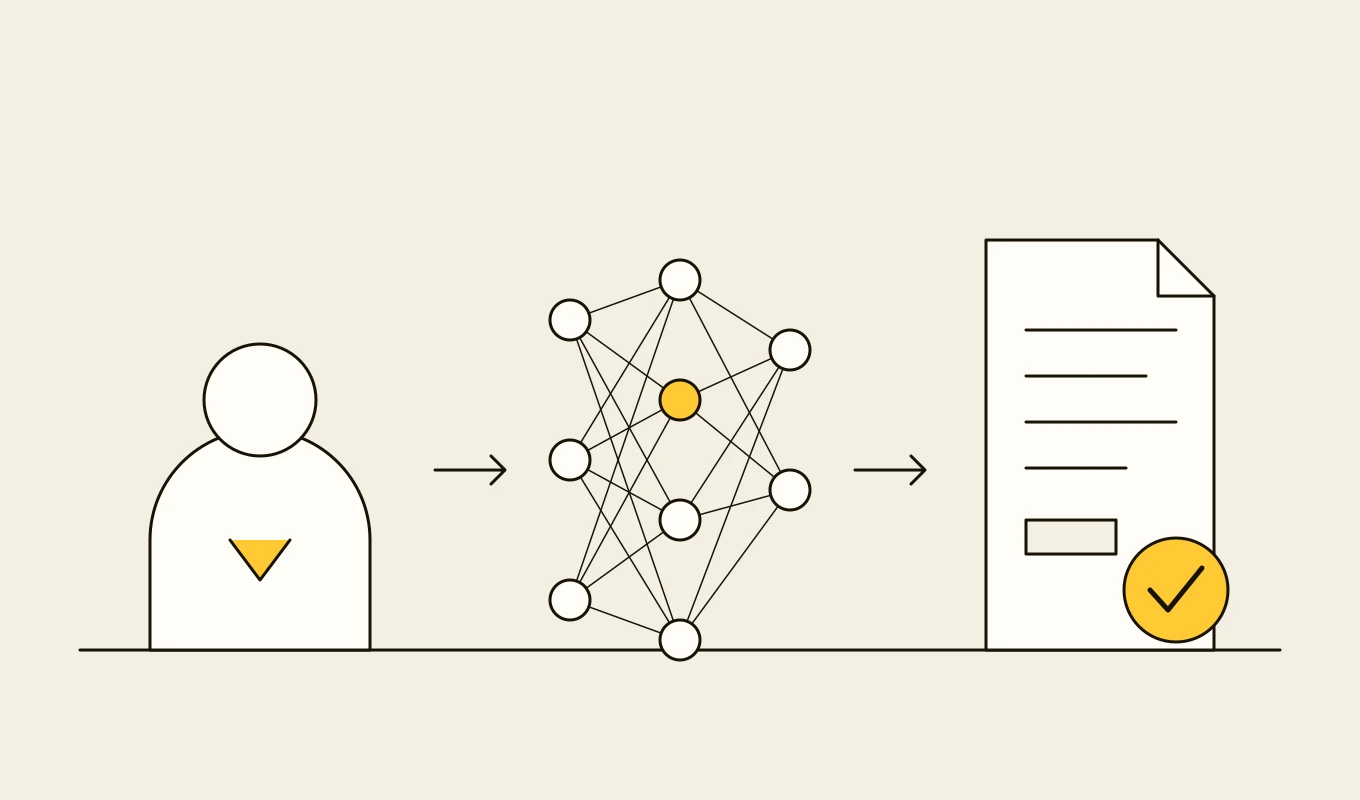
RFP template · Banking
SME lending platform RFP template
Requirements to put in an RFP for an SME loan management system, from application intake to regulatory reporting, plus the questions to ask every vendor.- 01Eight requirement areas, each as a checklist you can paste into an RFP.
- 02Integration and data points your core banking and IT teams need to answer.
- 03Security, resilience and regulatory items that are easy to miss.
- 04Seven questions to put to any vendor or development partner.
Free download
Get it on screen in a few seconds.
What the system does, module by module.
- 01
Grounded retrieval
Search across the credit file, financial spreads, policy documents, news and prior memos, with each answer tied to the passages it came from. - 02
Memo section drafting
First drafts of business description, market, management, financial performance and risk sections from the file, in the bank's own memo structure and tone. - 03
Client and meeting summaries
Summaries of long documents, call notes and correspondence, for relationship managers preparing for a meeting or review. - 04
Financial commentary
Plain-language commentary on spread financials and ratios, with every figure checked against the numbers in the system. - 05
Citations and traceability
Each statement links to its source passage, so the analyst can verify it in one click. - 06
Policy and covenant questions
Answers to questions such as which covenants apply or what the policy says about a sector, with references to the policy text. - 07
Analyst editing and sign-off
The analyst edits and approves every section. The system records what was generated and what was changed. - 08
Evaluation and guardrails
A test set of real tasks run against every change, with checks for unsupported claims, wrong figures and leakage of restricted information. - 09
Logging and review
Prompts, retrieved passages and outputs stored with user and time, available to model risk and audit.
Reference architecture.
Standards and interfaces
What we design against.
- OWASP Top 10 for LLM Applications
- The 2025 list of risks, including prompt injection, sensitive information disclosure and excessive agency, used as the security checklist.
- NIST AI Risk Management Framework
- Govern, map, measure and manage functions for the assistant's life cycle.
- ISO/IEC 42001
- An AI management system standard some banks use to organise governance and accountability.
- Model risk management guidance
- Treatment of the assistant as a model or tool with defined use, validation and monitoring.
- HKMA guidance on generative AI
- Supervisory expectations for governance, transparency and customer protection when banks use generative AI.
- Data protection and confidentiality
- Controls on client data used in prompts and outputs, and on where models are hosted.
Data model
The core entities.
- Source document
- File, client, classification, permissions and the chunks and embeddings built from it.
- Query and session
- User, question, permitted scope, time and the retrieved passages.
- Generated output
- Text, cited passages, model and prompt version and any guardrail result.
- Analyst edit
- Changes from the draft to the approved text and the person who approved it.
- Evaluation case
- Task, reference answer, scoring and results by model and prompt version.
- Guardrail event
- Rule triggered, content and action taken.
- Policy and prompt version
- Instructions, templates, owner, approval and live dates.
When custom development is the right call.
Controls designed in, not added later.
Permission-aware retrieval
The assistant retrieves only what the user is entitled to see, and restricted deals stay out of search.Prompt injection defences
Documents are treated as untrusted input, instructions in content are not obeyed, and tools the assistant can call are limited and logged.Private hosting options
Models hosted in your own environment or a private endpoint, with no training on your data.Logging and oversight
Prompts, sources and outputs recorded for audit, with review of samples by model risk.Human accountability
The analyst owns the memo. The assistant cannot approve, submit or change any record.
From discovery to a system you run.
- 01
Use case and risk assessment
We choose the first tasks with credit and model risk, define what the assistant may and may not do and agree how it will be evaluated. - 02
Retrieval and evaluation set
Documents are indexed with permissions, and a test set of real tasks and reference answers is built with analysts. - 03
Build and tune
Drafting, summarising and citation features are built and measured against the test set. - 04
Pilot with one team
A small analyst team uses the copilot on live files, and edits and feedback are analysed. - 05
Extend with controls
More teams and tasks are added only as evaluation results and model risk review allow.
Relevant work
Where to see our work.
Related
Keep reading.
Common questions.
- Will the copilot make up facts?
- Language models can. We reduce it by answering only from retrieved passages, requiring citations, checking every figure against the numbers in the system, and testing against a set of real tasks with each change. The analyst still reviews and owns the memo.
- Does client data leave our environment?
- Not unless you decide it should. Models can be hosted in your own environment or at a private endpoint, and retrieval runs against your own indexes with your permissions.
- How do you protect against prompt injection?
- Retrieved documents are handled as untrusted. Instructions inside them are not followed, the assistant has no ability to act on systems, and outputs are checked before they are shown.
- Does it replace analysts?
- No. It speeds up first drafts and summaries. Judgement, sign-off and accountability stay with the analyst and the credit committee.
- Who owns the code?
- You do. The code, the prompts, the evaluation sets and the data stay yours.