Digital product engineering · Manufacturing
B2B customer and distributor portal for manufacturers
We build custom B2B customer and distributor portals for manufacturers: a catalogue with each customer's prices, fast ordering and reordering, order and delivery tracking, spare parts lookup, technical documents, returns and service requests, connected to your ERP. Customers serve themselves at any hour and your staff handle exceptions instead of routine questions, and you own the code.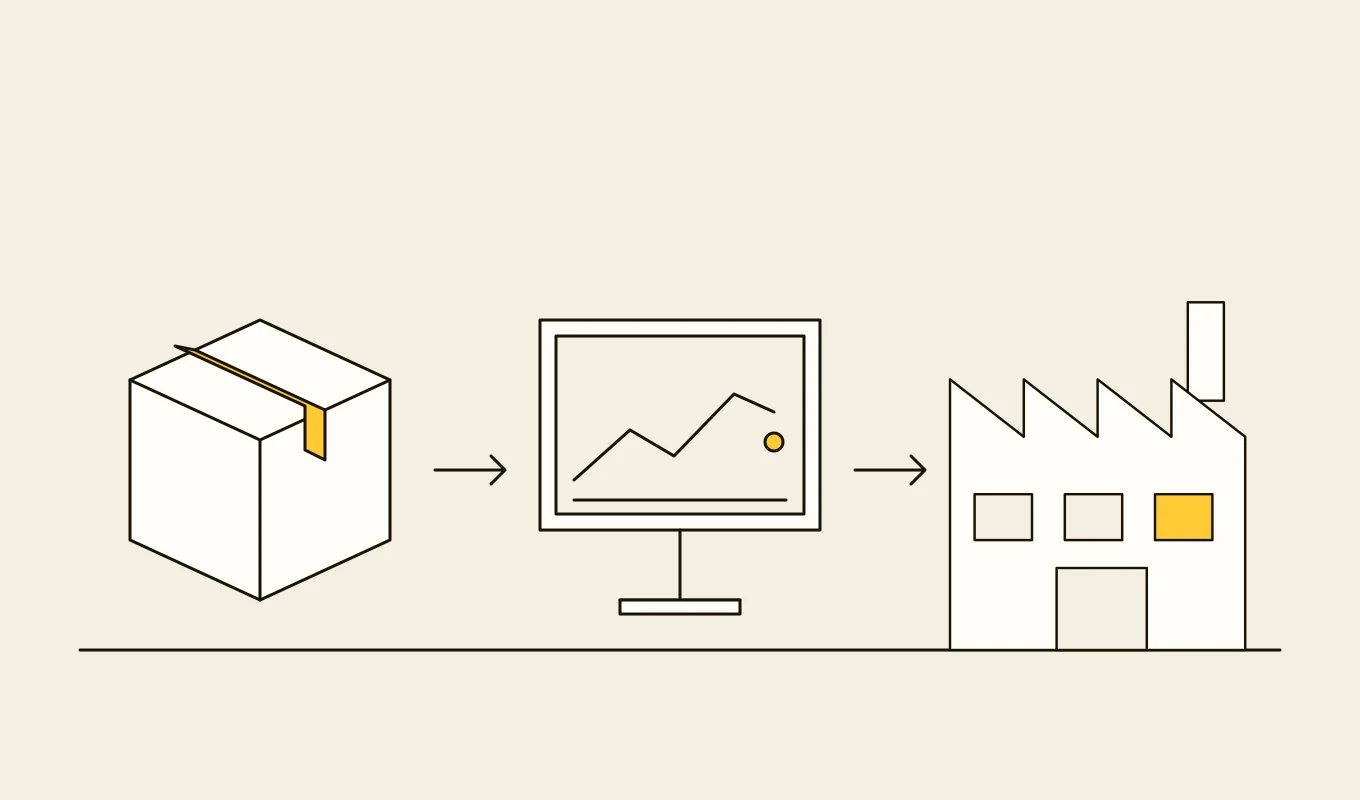
Requirements template · Manufacturing
Manufacturing systems requirements template
A requirements template for a manufacturing execution system or manufacturing operations layer, organised around ISA-95: orders, scheduling, shop-floor data, traceability, quality, equipment and integration.- 01Eight requirement areas written as testable statements.
- 02The fields a machine signal list needs before you connect equipment.
- 03Integration points with the ERP and the plant network.
- 04Seven questions to put to any vendor or development partner.
Free download
Get it on screen in a few seconds.
What the system does, module by module.
- 01
Accounts, users and roles
Customer and distributor organisations with their own users, roles, approval limits and ship-to locations, managed by the customer's administrator. - 02
Catalogue with customer pricing
Product data, availability and each customer's price lists, discounts and terms, with search by part number, specification or application. - 03
Fast ordering and reordering
Quick order by part number, upload of order files, repeat orders, order templates and approval for larger orders. - 04
Order and delivery tracking
Status from order to dispatch and delivery, with tracking links, documents and notifications on change. - 05
Spare parts lookup
Exploded views and parts lists by product and serial number, so customers find and order the right part first time. - 06
Technical documents and downloads
Datasheets, manuals, certificates and CAD models, filtered by product and entitlement, with the current version always shown. - 07
Invoices, statements and payments
Invoices and statements on demand, credit limit and balance, and online payment where the business uses it. - 08
Returns, warranty and service requests
Returns authorisation, warranty claims and service requests with photos and serial numbers, tracked to resolution. - 09
Integration and EDI
Connection to the ERP for products, stock, prices and orders, and electronic exchange with customers who order from their own systems.
Reference architecture.
Standards and interfaces
What we design against.
- EDI and e-invoicing
- ANSI X12, EDIFACT, UBL and Peppol for customers who order and receive invoices electronically.
- OpenAPI
- Interfaces to the ERP, product information, CRM and logistics systems.
- OAuth 2.0, OpenID Connect and SAML
- Sign-in for customer users, including single sign-on from the customer's own identity provider.
- Product data standards
- Classification and attribute standards such as ETIM or ECLASS where the industry uses them.
- WCAG 2.2
- Accessible ordering and document pages for all users.
- Data protection and trade rules
- Handling of contact data, price confidentiality and export restrictions.
Data model
The core entities.
- Customer account
- Organisation, ship-to addresses, price list, credit terms, users and roles.
- Product and part
- Specifications, classification, media, documents, availability and relationships.
- Price and term
- Price lists, discounts, validity and customer-specific agreements.
- Order and line
- Items, quantities, prices, delivery dates, status and the ERP reference.
- Installed product
- Serial number, owner, configuration and the parts list for the unit.
- Return and claim
- Item, reason, photos, authorisation, status and resolution.
- Document entitlement
- Which documents each customer may access, by product and version.
When custom development is the right call.
Controls designed in, not added later.
Customer separation
Each organisation sees only its own prices, orders, invoices and documents, enforced on the server.Strong authentication
Multi-factor sign-in and single sign-on from the customer's identity provider where wanted.Price confidentiality
Price lists and terms are protected from enumeration and export beyond what a customer is entitled to.Delegated administration
Customer administrators add and remove their own users, with every change logged.Resilience
Orders are queued and idempotent, so an ERP outage does not lose or duplicate them.
From discovery to a system you run.
- 01
Customer and process review
We interview customers, distributors and the order desk and trace the top tasks they carry out by email and phone. - 02
Design and integration plan
Journeys, data sources and the ERP and product data interfaces are agreed, with the customer groups to start with. - 03
Build ordering and tracking
Accounts, catalogue with pricing, ordering and tracking come first, then parts, documents and finance. - 04
Pilot with selected customers
A group of customers and distributors use the portal on live orders while support is tuned. - 05
Open to all and extend
All customers move across, with returns, service and EDI added from the roadmap.
Relevant work
Where to see our work.
Common questions.
- Will customers actually use a portal?
- They will if it is faster than email. We design around the tasks customers repeat, such as reordering, finding a part and checking a delivery, test the screens with real customers and let large customers connect their own systems.
- How do prices stay in sync with the ERP?
- Prices and terms are read from the ERP or a pricing service, so a customer sees what the order desk would quote, and an order placed in the portal creates the same order in the ERP.
- Can distributors have their own customers inside the portal?
- Yes. A distributor organisation can manage its users and, where the business model needs it, its own end customers, with separate price lists.
- Can it support spare parts by serial number?
- Yes. Parts lists and exploded views are linked to the product's serial number and configuration, so the parts shown are those fitted to that unit.
- Who owns the code?
- You do. The code, the designs and the data stay yours.