AI/ML engineering · Manufacturing
Computer vision quality inspection for production lines
We build computer vision quality inspection for production lines: defect detection and classification on images from industrial cameras, inference at the edge fast enough for line speed, reject signals to the PLC, images and results linked to the lot and serial number, and a review station where people confirm doubtful cases and teach the system. We build the software around your cameras and optics, and you own the models and code.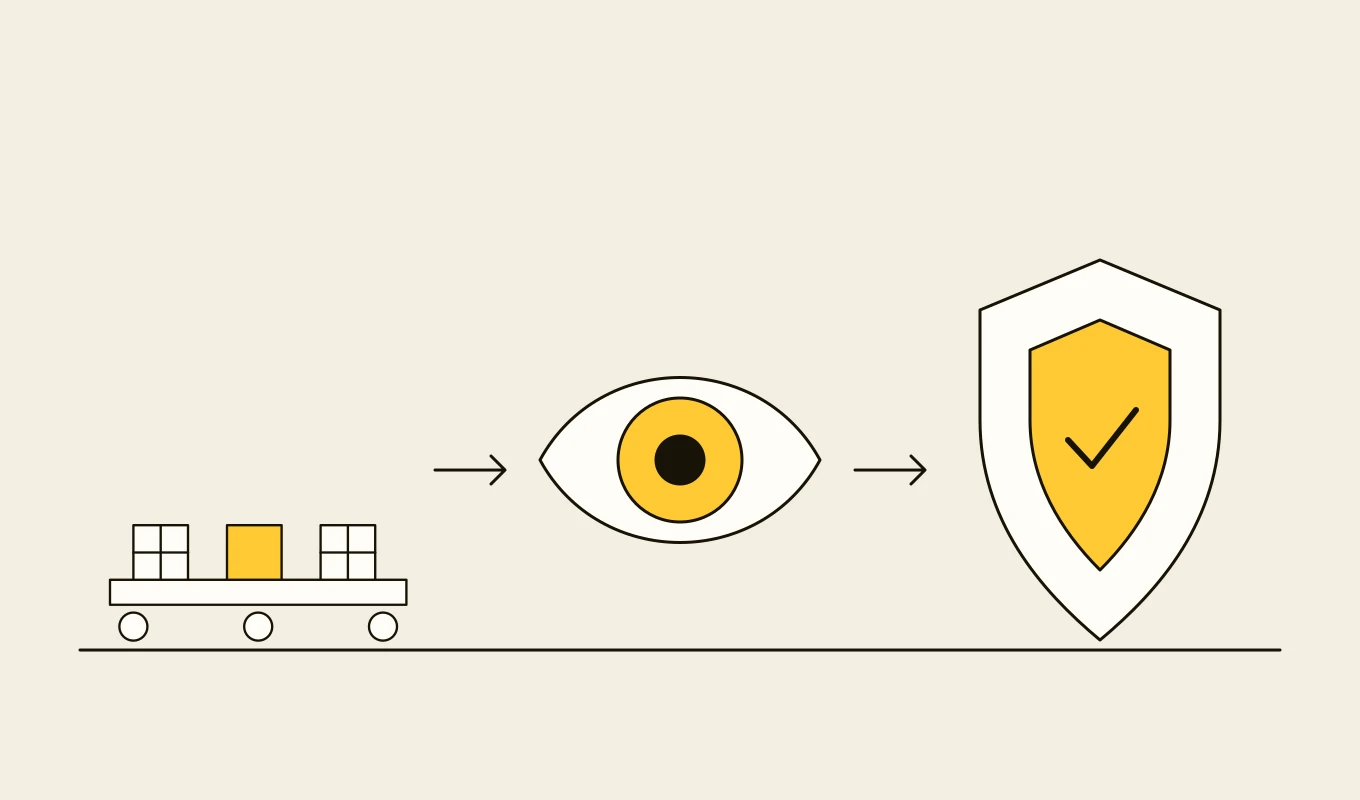
Checklist · AI readiness
Enterprise AI readiness and governance checklist
A checklist for enterprises planning machine learning, language model or agent projects: use case, data, hosting, security, evaluation, human oversight, governance, monitoring and cost.- 01Nine areas to settle before a model goes near production.
- 02The security items specific to language models and agents.
- 03Evaluation and monitoring questions that regulators and auditors ask.
- 04Seven questions to put to any vendor or development partner.
Free download
Get it on screen in a few seconds.
What the system does, module by module.
- 01
Image acquisition integration
Connection to industrial cameras and frame grabbers, triggers from line sensors, lighting control signals and consistent capture settings. - 02
Defect detection and classification
Models that find and classify defects such as scratches, dents, missing parts, contamination and misalignment, with a score and location for each. - 03
Anomaly detection for rare defects
Models trained on good parts that flag anything unusual, for cases where defect examples are scarce or new defects appear. - 04
Measurement and verification
Dimensional checks, presence and orientation checks, and reading of codes and text, as classical vision steps alongside the learned models. - 05
Edge inference
Models optimised and run on industrial computers or accelerators close to the line, meeting the cycle time with margin. - 06
PLC and reject integration
Pass and fail results returned to the PLC over OPC UA or digital I/O in time to divert the part, with handshakes and fail-safe behaviour. - 07
Traceability
Every image and decision stored against the order, lot, serial number and machine, so a customer complaint can be traced to the images taken. - 08
Review station and active learning
A screen where inspectors confirm or correct uncertain results, with those corrections feeding the next training round. - 09
Monitoring and model management
Tracking of reject rates, score distributions and drift, controlled model releases and rollback.
Reference architecture.
Standards and interfaces
What we design against.
- GigE Vision, GenICam and USB3 Vision
- Standards for connecting and configuring industrial cameras in a vendor-neutral way.
- OPC UA and PLC interfaces
- Result delivery and handshakes with controllers, plus digital I/O for hard real-time reject signals.
- ONNX and edge runtimes
- Portable model formats and optimised inference runtimes for industrial computers and accelerators.
- Quality system requirements
- Traceability, record retention and change control under ISO 9001 and sector standards, with validation for regulated products.
- Measurement system analysis
- Gauge repeatability and reproducibility practice, applied to the inspection system's agreement with human inspectors.
- Machine and functional safety
- Machine safety rules that govern any interaction with moving equipment, handled by the machine's safety system and not by the vision software.
Data model
The core entities.
- Inspection station and recipe
- Camera settings, lighting, models in use, thresholds and the product it applies to.
- Image
- File, time, station, order, lot, serial number and capture parameters.
- Detection
- Class, score, location, size and the model version that produced it.
- Inspection result
- Pass, fail or review, the rules applied and the signal sent to the PLC.
- Review and label
- Inspector's decision, corrected label and time taken.
- Model version
- Training data, evaluation by defect class, release date and rollback state.
- Drift metric
- Score distribution, reject rate and image statistics over time.
When custom development is the right call.
Controls designed in, not added later.
Fail-safe behaviour
If inspection is unavailable or uncertain, the line follows a defined safe default, such as rejecting or diverting for manual inspection.Controlled model changes
New models are tested offline, then in shadow mode, and released with approval and rollback.Image and result integrity
Images and results are stored unaltered and linked to the part, with retention by product and customer requirement.Network separation
The inspection system sits in the line's network zone with controlled connections to the business network.Role-based access
Only authorised staff can change recipes, thresholds and models, and every change is logged.
From discovery to a system you run.
- 01
Defect and line study
We collect samples of good and defective parts, measure cycle time and conditions and agree what must be detected and what a false reject costs. - 02
Imaging design and data collection
Camera, optics and lighting are chosen with the supplier, and a labelled image set is collected on the real line. - 03
Model development and offline test
Models are trained and tested against inspectors' decisions, with results by defect class. - 04
Shadow mode on the line
The system inspects live parts without rejecting, and its results are compared with the current inspection. - 05
Go live and improve
Reject signals are switched on, the review station is used daily, and models are retrained from its corrections.
Relevant work
Where to see our work.
Common questions.
- Do we need many defect images to start?
- Not always. Anomaly detection learns from good parts and flags anything unusual, which suits rare or new defects. Supervised classification of known defects improves as labelled examples accumulate through the review station.
- Is it fast enough for our line?
- Models are optimised and run at the edge to meet the cycle time with margin, and we test it on your line with the real parts and speed before it can reject anything.
- Do you supply cameras and lighting?
- No. We build the software and integration. Cameras, optics and lighting come from vendors and integrators you choose, and good imaging matters as much as the model, so we advise on requirements.
- How does it connect to the PLC?
- Over OPC UA or digital signals with a defined handshake and a fail-safe default, so the line behaves predictably if inspection is slow or down.
- Who owns the models and images?
- You do. The models, the code, the images and the labels stay yours.