Enterprise platforms · Industrial IoT
Industrial IoT and SCADA integration (OPC UA, Modbus, MQTT)
We build industrial IoT and SCADA integration for manufacturers and process industries: connections to PLCs, SCADA and historians over OPC UA, Modbus and MQTT, a unified namespace that gives every system the same view of plant data, and secure, mostly one-way flows to enterprise and cloud systems. We build the software and integration around your control systems, and you own the code.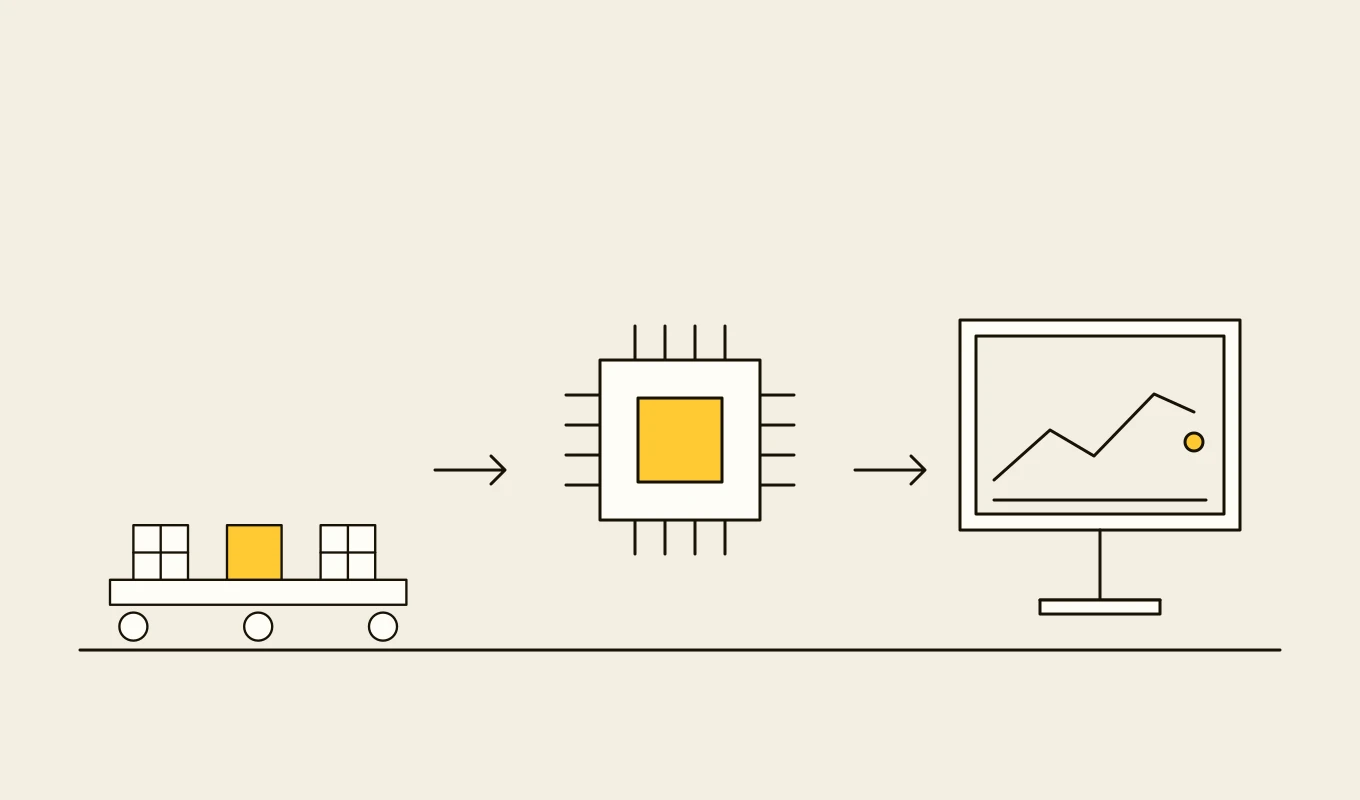
Checklist · IoT and devices
Industrial IoT and device integration checklist
A checklist for projects that connect devices, machines and sensors to software: use case, device inventory, protocols, gateways, data model, security, lifecycle and enterprise integration.- 01Eight areas to settle before you connect a fleet of devices or a plant.
- 02The device and signal facts that integration teams always need.
- 03Security and update items that are hard to add later.
- 04Seven questions to put to any vendor or development partner.
Free download
Get it on screen in a few seconds.
What the system does, module by module.
- 01
Protocol connectivity
Adapters for OPC UA, Modbus RTU and TCP, MQTT and other industrial protocols, with gateways for legacy fieldbuses and bridges for vendor-specific interfaces. - 02
Tag and signal inventory
A governed list of every signal with its address, type, unit, scaling, owner and meaning, as the basis of all mapping. - 03
Unified namespace
A single, hierarchical model of enterprise, site, area, line and equipment through which data is published and discovered by every consumer. - 04
Edge collection and buffering
Collection near the machine with store-and-forward, so data survives network outages and arrives with its original timestamps. - 05
Historian integration
Reading from and writing to process historians, with backfill, aggregation and the retention policies engineers expect. - 06
Data contextualisation
Raw tags enriched with equipment, product, batch and shift context, so a number on a screen means something to an analyst. - 07
Events and alarm integration
Alarms and events from control systems passed to maintenance, quality and operations systems with the context needed to act. - 08
Enterprise and cloud pipelines
Flows to the MES, ERP, data platform and cloud analytics, with one-way gateways where policy requires. - 09
Monitoring and diagnostics
Health of connections, tag quality, latency and gaps, with alerts when data stops or looks wrong.
Reference architecture.
Standards and interfaces
What we design against.
- OPC UA (IEC 62541)
- The vendor-neutral interface to controllers and servers, including information models and publish-subscribe, preferred wherever the equipment supports it.
- Modbus
- A widely used serial and TCP protocol for older devices, mapped through well-defined register lists.
- MQTT and Sparkplug B
- Lightweight messaging and a topic and payload convention that makes a unified namespace practical and stateful.
- ISA-95
- The hierarchy of enterprise, site, area and line, and the exchange between business and operations systems, used to structure the namespace.
- IEC 62443
- Zones and conduits, secure development and component requirements for industrial automation and control systems.
- Purdue model and network segmentation
- The reference for separating control, supervisory and business networks and for placing the gateways between them.
Data model
The core entities.
- Signal (tag)
- Address, data type, unit, scaling, owner, description and the equipment it belongs to.
- Equipment and hierarchy node
- Enterprise, site, area, line, machine and the relationships between them.
- Measurement
- Value, quality code, source timestamp, receive timestamp and signal.
- Event and alarm
- Type, severity, source, time, acknowledgement and context.
- Context record
- Product, batch, shift or order active on an asset over a period.
- Connection
- Endpoint, protocol, security mode, status and last good read.
- Mapping
- Source signal, target topic or tag, transformation and version.
When custom development is the right call.
Controls designed in, not added later.
Read-only by default
Integrations read from control systems. Any write path is explicit, approved, limited and logged.Segmented networks
Gateways sit in a controlled zone between control and business networks, with firewall rules and monitoring on the conduit.Encrypted and authenticated links
OPC UA security modes and TLS on messaging, with certificates managed and rotated.Patch and change discipline
Integration components follow the plant's change management, with tested rollbacks and no unmanaged remote access.Visibility
Inventory of connections and flows, and monitoring for new or unusual connections.
From discovery to a system you run.
- 01
Plant and data survey
We list the equipment, protocols, historians and signals with operations and automation engineers, and agree the first use cases. - 02
Architecture and security design
The namespace, the edge components, the network boundary and the delivery paths are designed and approved by IT and OT security. - 03
Connect one line
One line is connected, with a signal inventory, buffering and monitoring, and the data checked against the operators' own readings. - 04
Add context and consumers
Contextualisation and the first consumers, such as the MES, maintenance and analytics, are connected. - 05
Scale by line and plant
More lines and plants follow, with the same model and monitoring.
Relevant work
Where to see our work.
Common questions.
- Can you connect older equipment that only speaks Modbus or a fieldbus?
- Yes, through gateways and protocol adapters. Signals are mapped from register lists or the fieldbus, scaled, given units and published into the same namespace as modern equipment.
- Will this write to our control systems?
- Not by default. Integration is read-only. If a write path is needed, such as sending a recipe or a setpoint, it is designed explicitly with approval, limits and logging, and agreed with the automation owner.
- What is a unified namespace?
- A single, structured place where plant data is published by site, area, line and equipment, so every consumer finds and uses the same data in the same form instead of building point-to-point connections.
- How do you keep OT secure?
- By segmenting networks, using authenticated and encrypted protocols, minimising inbound access to the plant, keeping integrations read-only and following IEC 62443 practice for components and development.
- Who owns the code?
- You do. The code, the mappings and the data stay yours.