AI/ML engineering · Manufacturing
Demand forecasting and S&OP analytics for manufacturers
We build demand forecasting and S&OP analytics for manufacturers: statistical and machine learning forecasts by product, customer and region, reconciliation across the hierarchy, special handling of intermittent and new-product demand, and a process for planners to review and override with measured forecast value added. Forecasts flow into planning and the ERP, and the models and code are yours.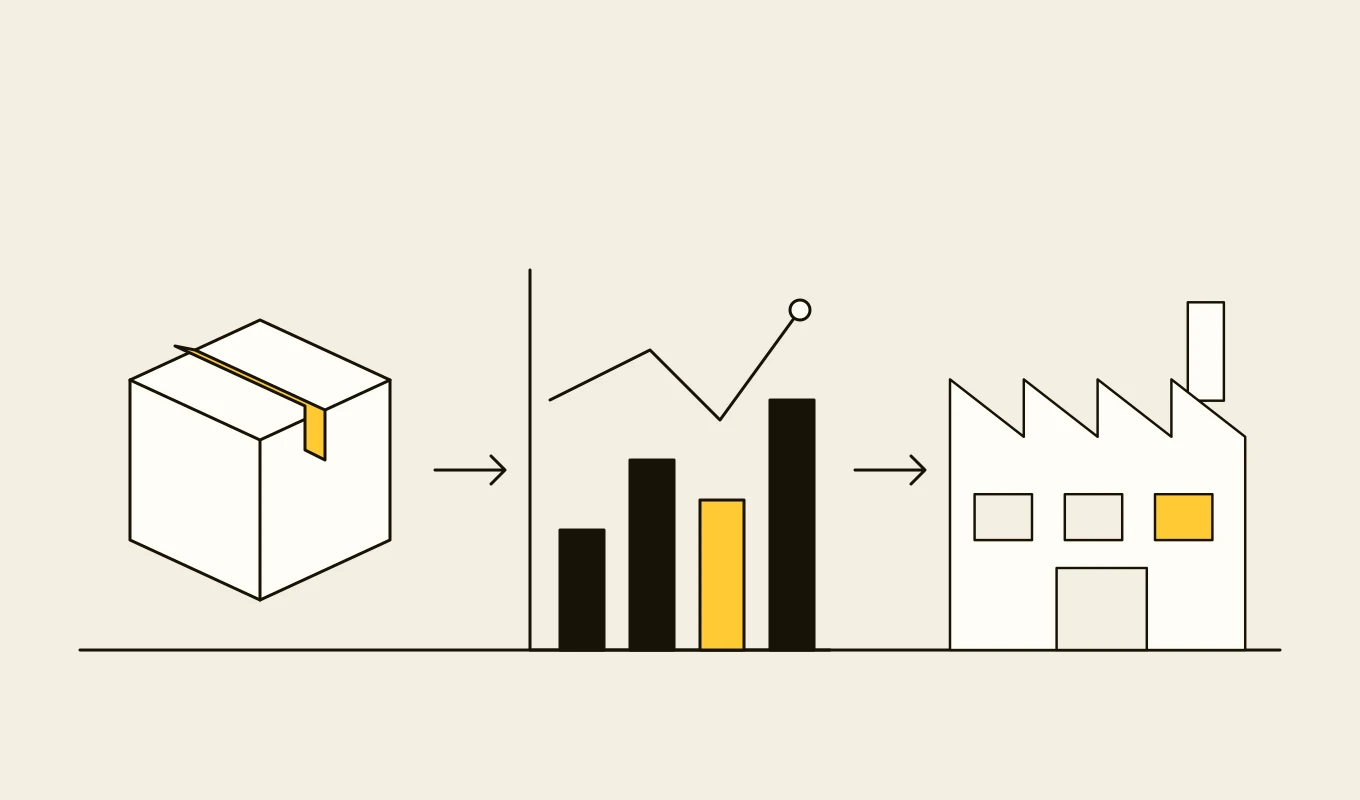
Checklist · AI readiness
Enterprise AI readiness and governance checklist
A checklist for enterprises planning machine learning, language model or agent projects: use case, data, hosting, security, evaluation, human oversight, governance, monitoring and cost.- 01Nine areas to settle before a model goes near production.
- 02The security items specific to language models and agents.
- 03Evaluation and monitoring questions that regulators and auditors ask.
- 04Seven questions to put to any vendor or development partner.
Free download
Get it on screen in a few seconds.
What the system does, module by module.
- 01
Demand data preparation
History cleaned of stock-outs, returns, one-off orders and calendar effects, with the actual demand reconstructed from orders and shipments. - 02
Statistical baseline
Exponential smoothing, ARIMA and related methods with seasonality and trend, as a transparent baseline every other method must beat. - 03
Machine learning models
Gradient boosting and neural sequence models that use price, promotions, weather, economic indicators and customer signals as drivers. - 04
Intermittent demand
Methods for slow-moving and lumpy items, such as Croston-type models and probabilistic approaches, that give usable forecasts for spare parts and long-tail products. - 05
New product forecasting
Forecasts for products without history from analogues, attributes and launch plans, adjusted as early sales arrive. - 06
Hierarchical reconciliation
Forecasts at product, family, customer and region levels reconciled so they add up and use the best information at each level. - 07
Forecast accuracy and value added
Error and bias measures by segment and horizon, and a measure of whether each planner override improved or worsened the forecast. - 08
Consensus and S&OP workflow
A workspace where sales, marketing, planning and finance review forecasts, propose changes with reasons and agree one number. - 09
Inventory and supply links
Forecast distributions feeding safety stock, production planning and procurement in the ERP and planning tools.
Reference architecture.
Standards and interfaces
What we design against.
- Forecast accuracy metrics
- WAPE, bias, MASE and probabilistic scores, chosen for each use, and reported by segment and horizon.
- Hierarchical forecast reconciliation
- Methods such as optimal reconciliation that make forecasts coherent across levels of a hierarchy.
- S&OP and IBP practice
- Sales and operations planning cycles, roles and decision rights that the workflow supports.
- ISA-95 and ERP interfaces
- Exchange of demand plans with planning, MES and ERP systems.
- Model validation practice
- Rolling-origin backtests and monitoring that show how a model performs on genuinely unseen periods.
- Data protection and confidentiality
- Controls on customer and pricing data used as drivers.
Data model
The core entities.
- Product and customer hierarchy
- Items, families, customers, regions and the relationships that define aggregation.
- Demand series
- History by item, customer and period, with adjustments and the reason for each.
- Driver
- Price, promotion, event or external indicator, its time series and its source.
- Forecast
- Method and version, horizon, point and probabilistic values, and the data cut-off.
- Override
- Original and adjusted value, reason, author and later accuracy.
- Accuracy record
- Forecast, actual, error measures and segment.
- Consensus plan
- Agreed numbers per cycle, approvers and changes from the previous cycle.
When custom development is the right call.
Controls designed in, not added later.
Governed models
Models are versioned and tested before they replace a baseline, with performance monitored in use.Override accountability
Every override records the author and the reason, and its value is measured later.Confidential commercial data
Customer, price and promotion data is restricted by role and customer.Reproducibility
A forecast can be reproduced from its data cut-off and model version.Integration integrity
Publication of the consensus plan to the ERP is controlled and idempotent.
From discovery to a system you run.
- 01
Planning process and data review
We review how forecasts are made and used today and what history, drivers and hierarchy are available, with planning, sales and finance. - 02
Baseline and accuracy framework
A statistical baseline and a rolling backtest are built first, so every later model is judged against the same standard. - 03
Machine learning and special cases
Learned models, intermittent demand and new product methods are developed and compared with the baseline by segment. - 04
Run in parallel for a cycle
Planners see the new forecast beside their own for a planning cycle, and the differences are reviewed. - 05
Integrate and run the S&OP cycle
The consensus workflow goes live, forecasts feed the ERP and planning, and accuracy and value added are reported.
Relevant work
Where to see our work.
Common questions.
- Will machine learning beat our current forecast?
- Sometimes, and not for every item. We build a transparent baseline and measure every method against it by segment, so machine learning is used where it adds accuracy and nowhere else.
- How do you forecast slow-moving and spare parts?
- With methods designed for intermittent demand, which forecast the probability and size of demand rather than a smooth line, and feed those distributions into inventory decisions.
- What about products that have just launched?
- New products are forecast from analogues and attributes, and the forecast adapts as early sales come in. The launch plan and judgement of the team are inputs, not afterthoughts.
- Do planners still override the forecast?
- Yes. Overrides are expected and tracked. The system measures whether they improved the forecast, so effort goes where human judgement adds value.
- Who owns the models and the code?
- You do. The models, the code and the data stay yours.