Enterprise platforms · Oil and gas
Exploration and subsurface data management system
We build custom exploration and subsurface data management systems for operators, national oil companies and regulators: a catalogue and store for seismic, well, log, core and interpretation data, with quality control, licence-based entitlements, data rooms for partners and bidders, and interfaces to OSDU and Energistics standards. It makes exploration data findable and trustworthy, and you own the code.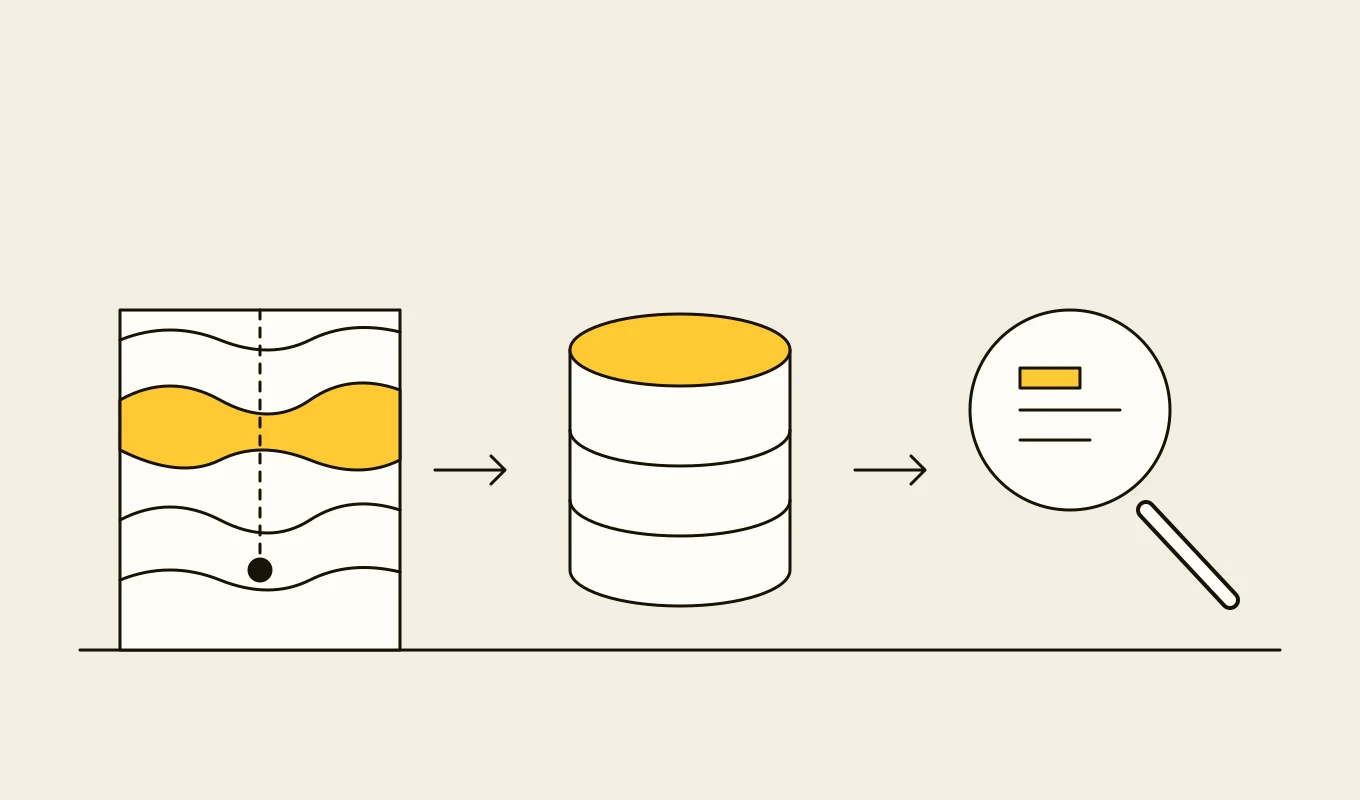
Checklist · Exploration data
Subsurface data management and OSDU readiness checklist
A checklist for exploration and subsurface data management projects: inventory, standards, quality, entitlements, data rooms, migration and the interfaces an OSDU data platform expects.- 01Eight areas to assess before you choose or build a subsurface data platform.
- 02The metadata and identifiers that make wells, surveys and licences findable.
- 03Entitlement and data room items that legal and partners ask about.
- 04Seven questions to put to any vendor or development partner.
Free download
Get it on screen in a few seconds.
What the system does, module by module.
- 01
Subsurface data catalogue
A searchable catalogue of surveys, wells, logs, cores, samples, reports, maps and interpretations, with a map view and filters by block, basin, vintage and type. - 02
Seismic data management
Survey and line metadata, navigation, SEG-Y and SEG-D files, processing history and tape or cloud storage locations, with data held in a tiered store. - 03
Well and log data
Well headers, deviation, formation tops and curves in LAS and DLIS, with unit and mnemonic standardisation and links to the reports that describe them. - 04
Interpretation and model links
Registration of horizons, faults, velocity and reservoir models produced in interpretation tools, with the data and software versions they came from. - 05
Quality control and lineage
Automated checks for completeness, units, coordinate systems and duplicates, and a recorded history of every transformation applied to a dataset. - 06
Licence, block and rights register
Licences, blocks, partners and obligations linked to the data acquired under them, so entitlements follow the contracts. - 07
Entitlements and data rooms
Access by licence, partner and role, and time-limited data rooms for bid rounds, farm-ins and divestments with a log of who saw what. - 08
Legacy digitisation and migration
Workflows for scanned reports, tape transcription and migration from legacy databases, with reconciliation of what was loaded. - 09
OSDU and standards interfaces
Ingestion and publication using OSDU Data Platform schemas, WITSML and RESQML exchange and OGC services for maps.
Reference architecture.
Standards and interfaces
What we design against.
- OSDU Data Platform
- The Open Group's open standard for subsurface and well data, with schemas, services and the reference-data conventions the platform follows.
- Energistics WITSML, PRODML and RESQML
- Open exchange standards for well, production and reservoir model data.
- SEG-Y, SEG-D, LAS and DLIS
- The file formats for seismic, field and well log data that the system reads, validates and stores.
- PPDM data model
- The Professional Petroleum Data Management Association's model, commonly used as the logical basis for catalogues and rights registers.
- OGC and ISO geospatial standards
- WMS and WFS services, GeoJSON and ISO 19115 metadata for maps and spatial search.
- Regulator data submission rules
- National requirements to deliver and retain seismic, well and report data, which the platform tracks per licence.
Data model
The core entities.
- Survey and line
- Acquisition details, geometry, navigation, processing versions and file locations.
- Well and wellbore
- Header, location, trajectory, status and identifiers across systems.
- Log, curve and core
- Curve data with units and mnemonics, core and sample records and the reports describing them.
- Interpretation object
- Horizon, fault, model or map, its project, software and the data it was built from.
- Licence and block
- Area, term, partners, obligations and the datasets acquired under them.
- Dataset and lineage
- Type, owner, quality results, transformations applied and storage location.
- Entitlement and access event
- Who may see which dataset, why, until when, and each access in a data room.
When custom development is the right call.
Controls designed in, not added later.
Licence-based entitlements
Access follows the contract: partner, licence, period and data type, with automatic expiry.Data room controls
Watermarked, read-only access for bidders, with every view and download logged.Classification and residency
Data held in the country or region the licence requires, with classification that controls export.Integrity and provenance
Hashes on stored files, and lineage that shows how a dataset was derived.Resilience
Tiered storage with tested restore for irreplaceable data such as old acquisition tapes.
From discovery to a system you run.
- 01
Data inventory and priorities
We survey what exists, where it is held and which datasets the business and regulator care about most. - 02
Model and standards design
The catalogue model, naming and unit standards, entitlement rules and OSDU mapping are agreed with geoscience, data management and legal. - 03
Build catalogue and load priority data
The catalogue and quality checks go first, loaded with the highest value data and reconciled to the sources. - 04
Entitlements and data rooms
Rights register, access rules and data rooms are added, and the first partner or bid round uses them. - 05
Migrate and extend
Legacy archives and further data types are migrated in order of value, with OSDU publication added.
Relevant work
Where to see our work.
Common questions.
- Do we need to adopt OSDU?
- Not necessarily. OSDU is the direction of travel for large operators, and we design the catalogue and interfaces so data can be published to or read from an OSDU platform. A smaller explorer may be better served by a clean catalogue first.
- Can the system hold seismic data itself?
- It manages seismic metadata and file locations in a tiered store, with the data in object storage, on-premise storage or archived media. Very large volumes stay where they are cheapest and are referenced from the catalogue.
- How do data rooms work for a bid round?
- A data room is a time-limited, read-only space with watermarking and per-user logs. Bidders see only the datasets released for the round, and access ends automatically.
- Can you migrate legacy databases and scanned archives?
- Yes. Migration is planned by data type and value, with reconciliation reports that show what was loaded, what was rejected and why.
- Who owns the code and the data?
- You do. The code, the catalogue and the data stay yours.