Enterprise platforms · Oil and gas
Digital twin development for plants and oil fields
We provide digital twin development for plants and oil fields: a connected model of the asset that joins its engineering data, live operating data and documents, shows them on schematic, map and three-dimensional views, detects anomalies and supports what-if analysis with the models your engineers already use. The twin reads from your operational systems and never controls them, and you own the code.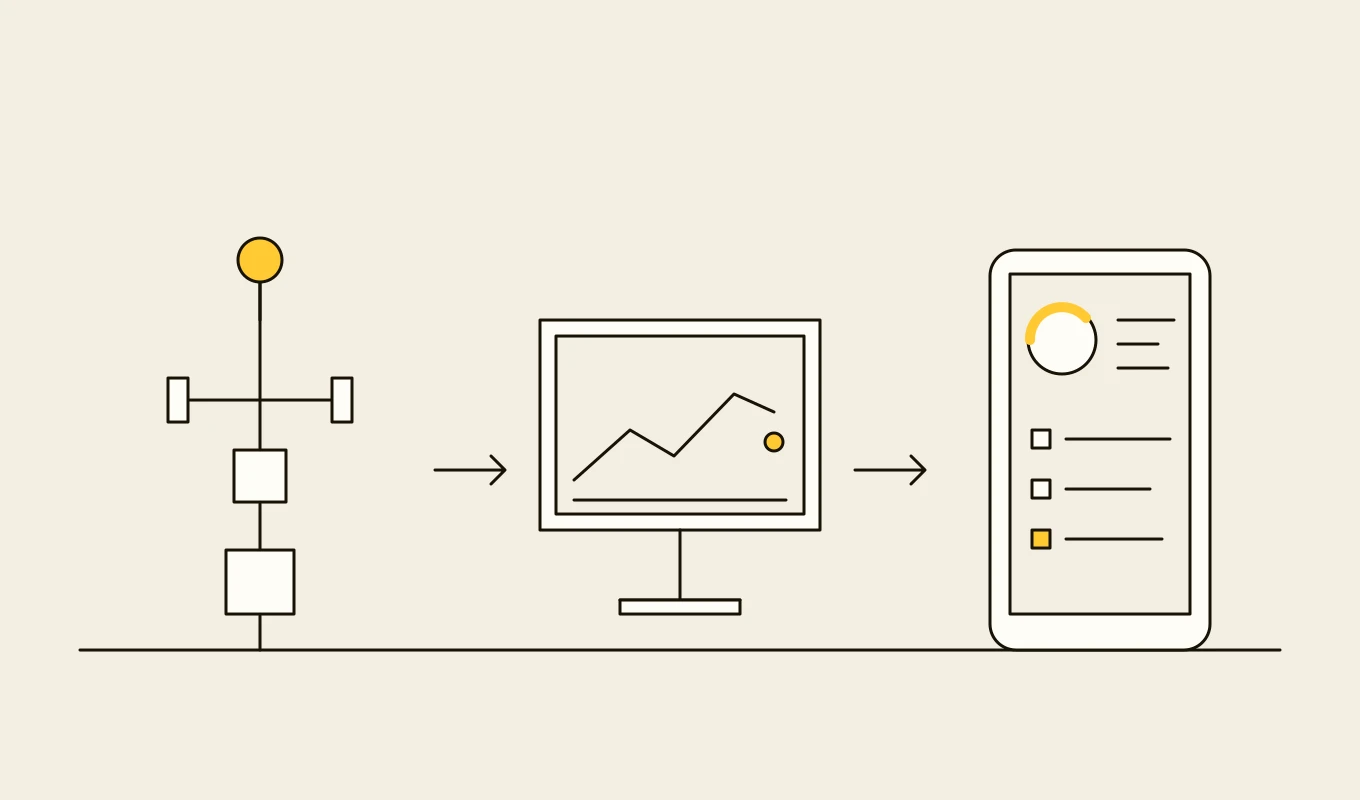
Checklist · IoT and devices
Industrial IoT and device integration checklist
A checklist for projects that connect devices, machines and sensors to software: use case, device inventory, protocols, gateways, data model, security, lifecycle and enterprise integration.- 01Eight areas to settle before you connect a fleet of devices or a plant.
- 02The device and signal facts that integration teams always need.
- 03Security and update items that are hard to add later.
- 04Seven questions to put to any vendor or development partner.
Free download
Get it on screen in a few seconds.
What the system does, module by module.
- 01
Asset and system model
A structured model of facilities, systems, equipment and instruments with relationships, built from the engineering register and kept in step with it. - 02
Live data connection
Operating values and events from historians and SCADA, attached to the right equipment in the model with unit and quality handling. - 03
Engineering documents and data
Datasheets, drawings, procedures and inspection records linked to each element, so what the equipment is and what it is doing are in one place. - 04
Schematic and map views
Interactive P&ID-style schematics and geographic maps showing status, values and alarms on the equipment they belong to. - 05
Three-dimensional views
Lightweight 3D models of facilities in the browser, with equipment selectable and linked to the same data as the schematic. - 06
Anomaly detection
Statistical and machine learning detection of unusual behaviour against each asset's own history and its peers, with the evidence shown to the user. - 07
Model-based what-if analysis
Connection to process, network or reservoir simulators so users can test changes on a copy of the current state before acting. - 08
Workflows and handoffs
Raising maintenance requests, inspections or investigations from the twin, with the context attached. - 09
Versioning and trust
Tracking of when the model and data were last verified against the plant, with flags where the model may be out of date.
Reference architecture.
Standards and interfaces
What we design against.
- ISO 23247
- A framework for digital twins in manufacturing, used as a reference for the architecture and the roles of the parts.
- Digital twin description languages
- Languages such as DTDL and the Asset Administration Shell that describe assets, their properties and relationships in a machine-readable way.
- FMI
- The Functional Mock-up Interface for exchanging and running simulation models in a standard way.
- CFIHOS and ISO 15926
- Engineering information standards that structure the equipment data a twin is built from.
- OPC UA
- Read-only interface to live values and events from control systems and historians.
- glTF and open 3D formats
- Lightweight formats for delivering 3D models in a browser.
Data model
The core entities.
- Asset node
- Type, tag, attributes, parent and children, and the source of each attribute.
- Relationship
- Connection between assets, such as flow, containment or control, with direction.
- Data binding
- Signal mapped to an asset property, with unit, scaling and quality rules.
- Document link
- Asset, document, revision and the date the link was verified.
- Anomaly
- Asset, signal, detection method, evidence, severity and disposition.
- Scenario
- Starting state, changes applied, simulator and results.
- Model verification
- Date and method by which the model was checked against the plant.
When custom development is the right call.
Controls designed in, not added later.
No write-back
The twin reads from operational systems and has no path to change setpoints or control logic.Network boundary
Live data crosses a controlled gateway between operational and business networks, designed to IEC 62443 zones and conduits.Access by role and asset
Users see the assets and data their role allows, with sensitive engineering and security data restricted.Integrity of the model
Changes to the asset model are approved and recorded, and the verification status is always visible.Audit trail
Views of sensitive models and exports are logged.
From discovery to a system you run.
- 01
Use case and data review
We agree the decisions the twin must support, and review the engineering data, live data and documents available for one facility. - 02
Model and integration design
The asset model, data bindings and the boundary to operational systems are designed with engineering, operations and security. - 03
Build a thin slice
One system or area is modelled end to end, with live data, documents and a schematic view. - 04
Add detection and simulation links
Anomaly detection and connection to a simulator are added and checked against known events. - 05
Extend across the facility
More systems and the three-dimensional view follow, with ownership of the model's upkeep agreed.
Relevant work
Where to see our work.
Common questions.
- What is a digital twin, in practical terms?
- A connected model of an asset that joins its engineering data, its live operating data and its documents, and presents them together so people can understand it, monitor it and test changes. It is useful when it answers specific questions better than the separate systems did.
- Does the twin control the plant?
- No. The twin reads data and supports decisions. Any action on the plant goes through the normal operations and control processes.
- How accurate does the model need to be?
- As accurate as the decisions require. We record when each part was last verified against the plant and show it, so users know how far to trust what they see.
- Can you build one for an oil field?
- Yes. A field twin links wells, facilities and the production network with live data and models, as in the EnerQuest pilot, which showed one operating picture on an illustrative model before any operational data was released.
- Who owns the code and the data?
- You do. The code, the model and the data stay yours.